Nathan Kopp
Lead/Senior Product / UX / UI Designer
Transforming complex enterprise platforms into scalable product ecosystems
through UX strategy, design systems, and AI-assisted design.
“I'm a product designer who can move between hands-on design, systems thinking
and the organisational structures that allow good design to scale.”
Who I am
PRODUCT DESIGN
Complex digital productsUX/UI
Discovery → Journeys → Interaction → Visual designSYSTEMS
Scalable design systems & governance
COLLABORATION
Product → Engineering → BusinessAI
AI-assisted design & prototypingTOOLS
Figma | Claude Ai | Miro
-
![]()
CI&T Infomedia Automotive SaaS
-
![]()
Ramsay Health Care
-
![]()
Woolies X
-
![]()
Cover More

Case Study 01: CI&T / Infomedia
The Challenge
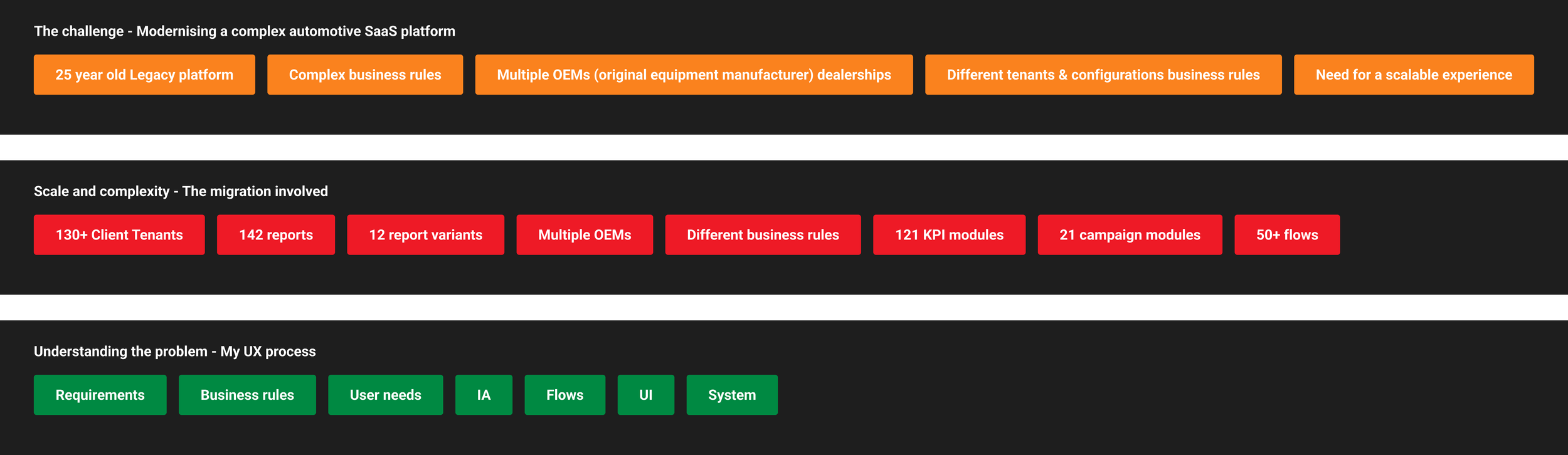
Modernising a complex automotive SaaS platform.
Project Overview
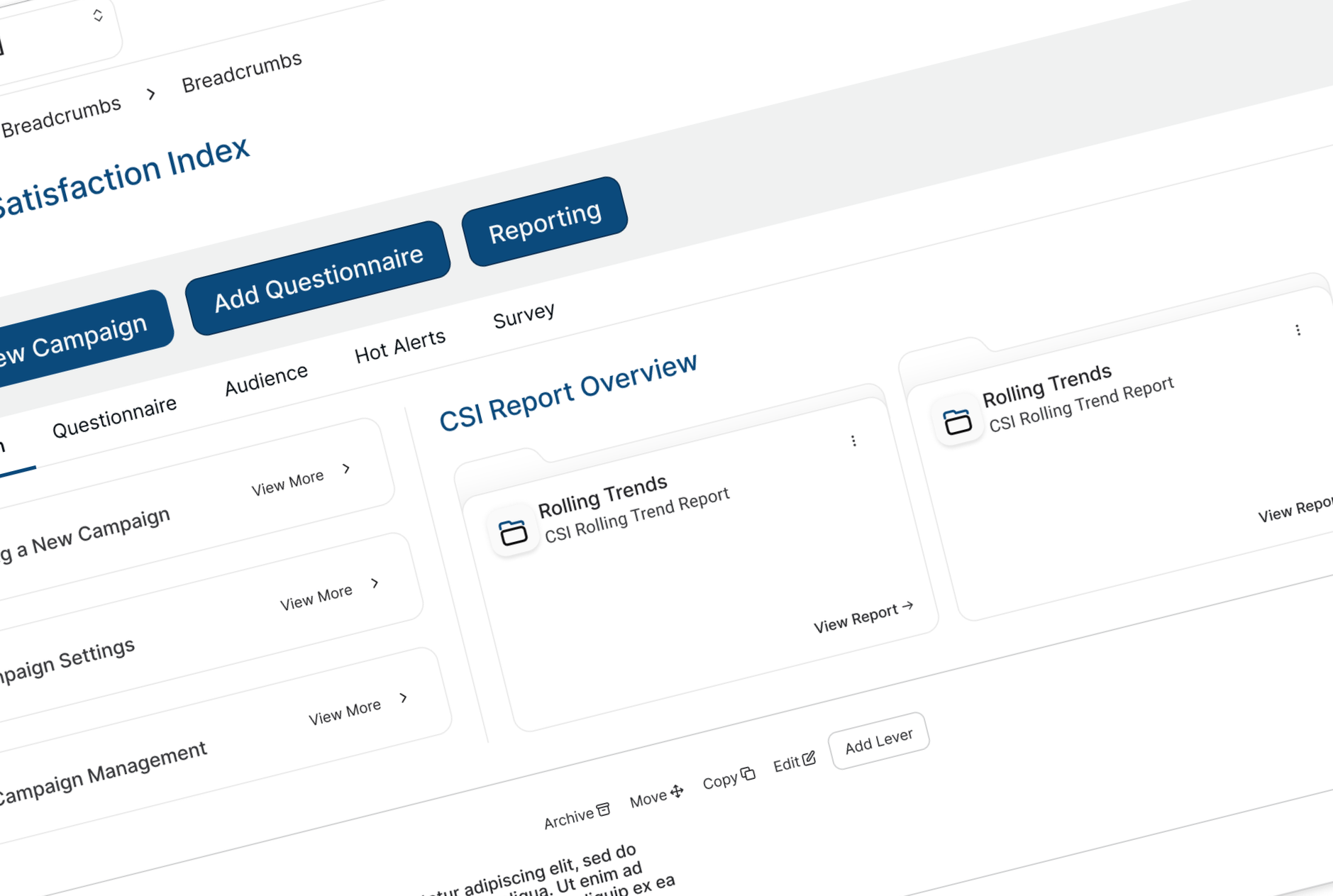
Infomedia provides SaaS solutions for automotive manufacturers and dealerships, helping them manage operational performance, report KPIs, and gain marketing insights.
-
Senior Lead Product Designer Responsible For
Discovery and requirements analysis
Reverse engineering existing experiences
Defining UX patterns
Defining and aligning the design system implementation
Creating scalable dashboard and reporting frameworks
-
• Audi
• Mitsubishi
• Suzuki
• Dealerships networks
-
Focused on migrating key reporting capabilities from a legacy platform to a modern architecture while improving usability and consistency.
-
Reporting
Dashboards
Performance Insights
Dealer KPI modules
-
The Migration Involved:
142 report variations
21 Dealer KPI modules
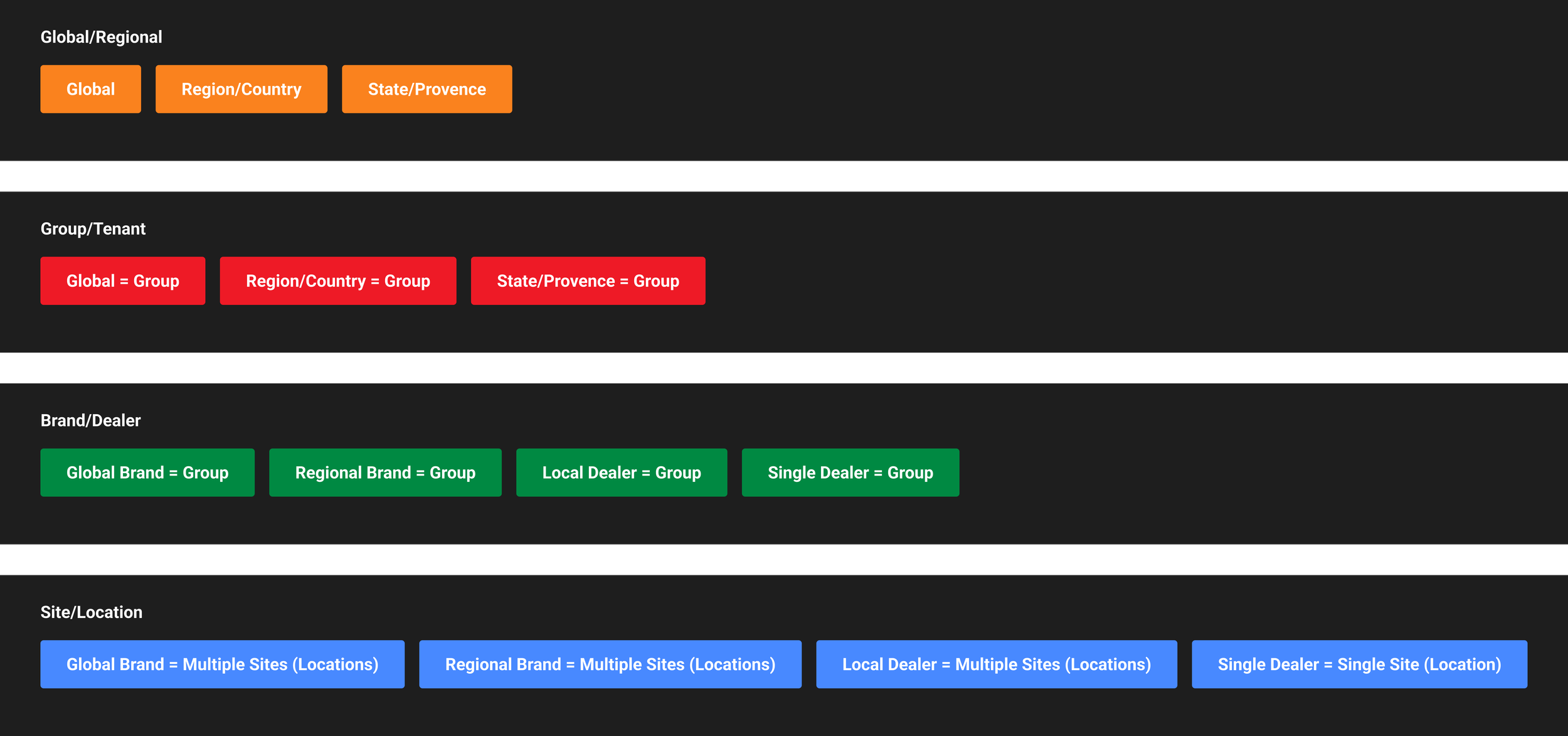
30 client tenants
Tenant-specific business logic
Different KPI calculations
Custom report configurations
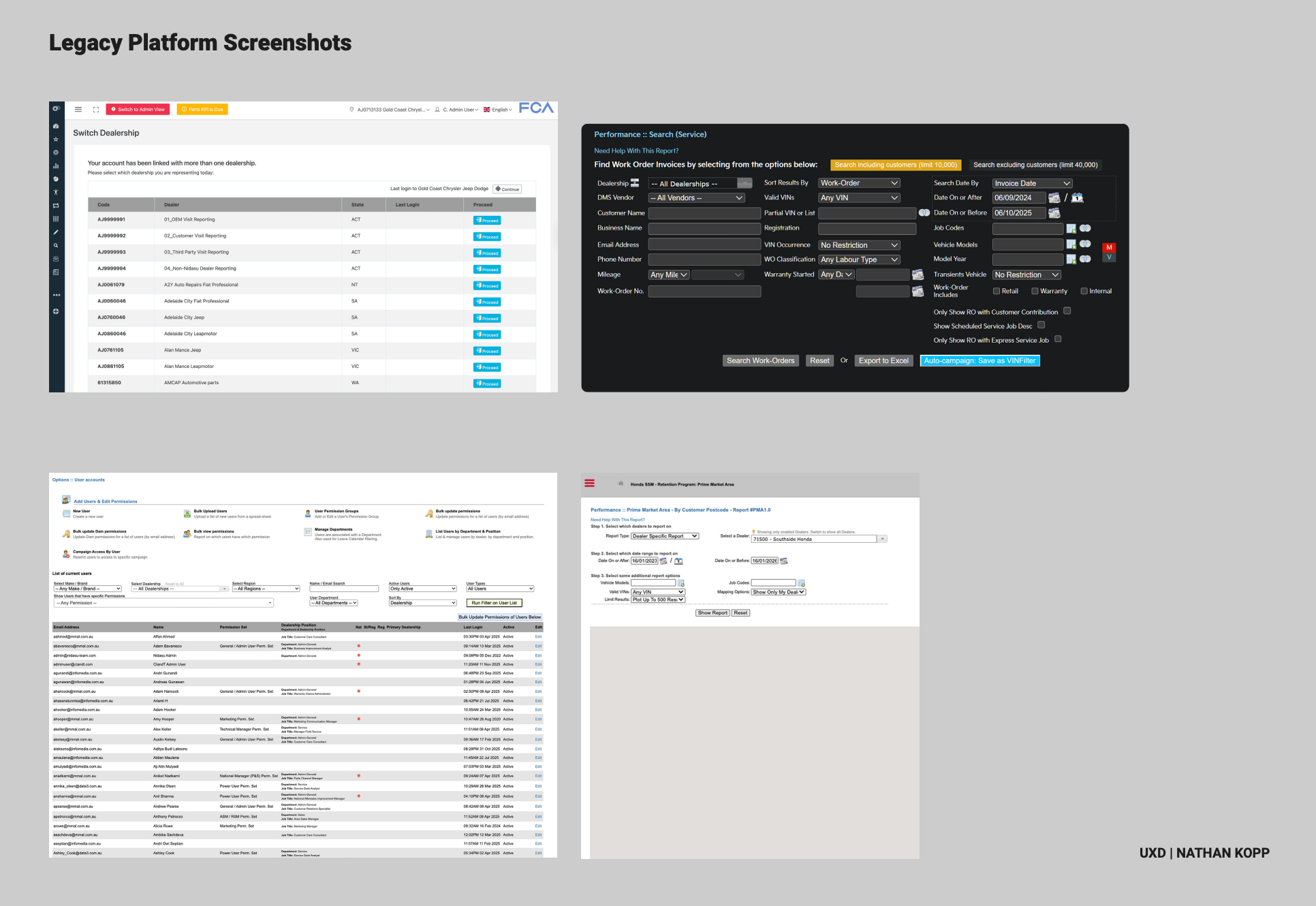
Legacy UI inconsistencies
The Business Structure
Discovery
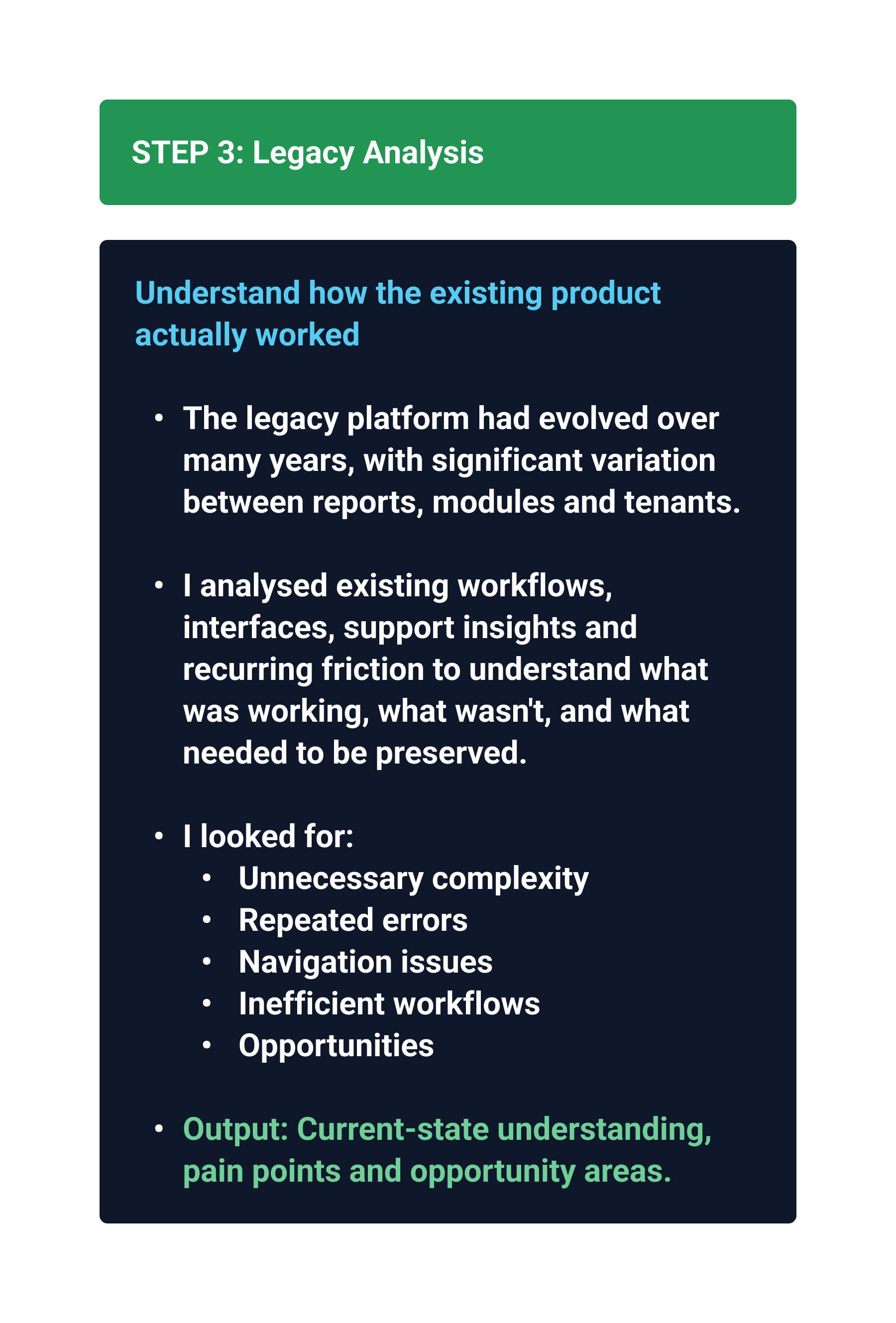
Before the team could begin any redesign, it needed to understand how the platform actually worked.
-
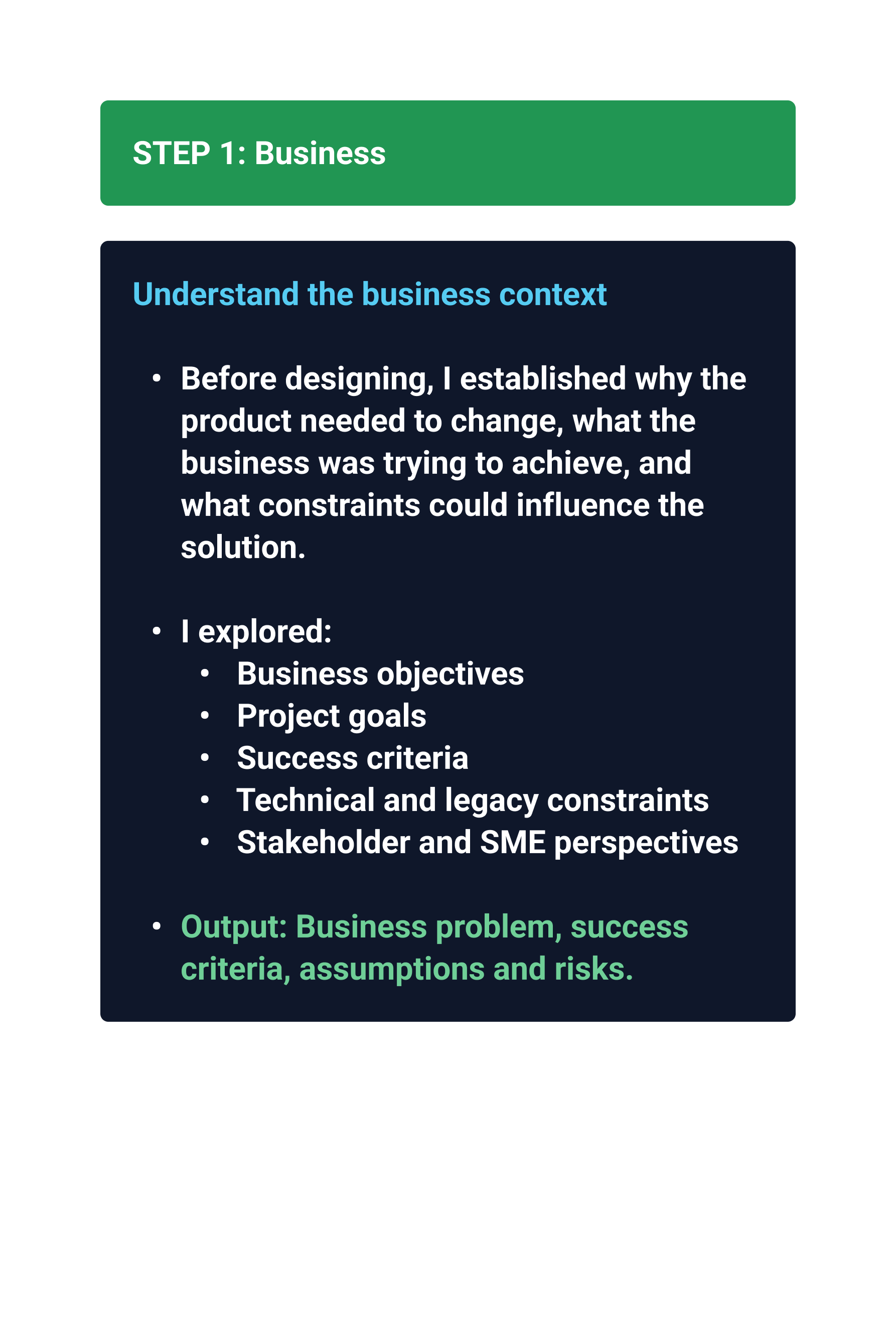
Understand the Business Context Activities
Review the BRD (Business Requirements
Document) and project goals
Understand why the modules exist
Identify business objectives and success criteria
Understand constraints (technical, regulatory, legacy)
Meet with the Product Manager, Engineering and SMEs
-
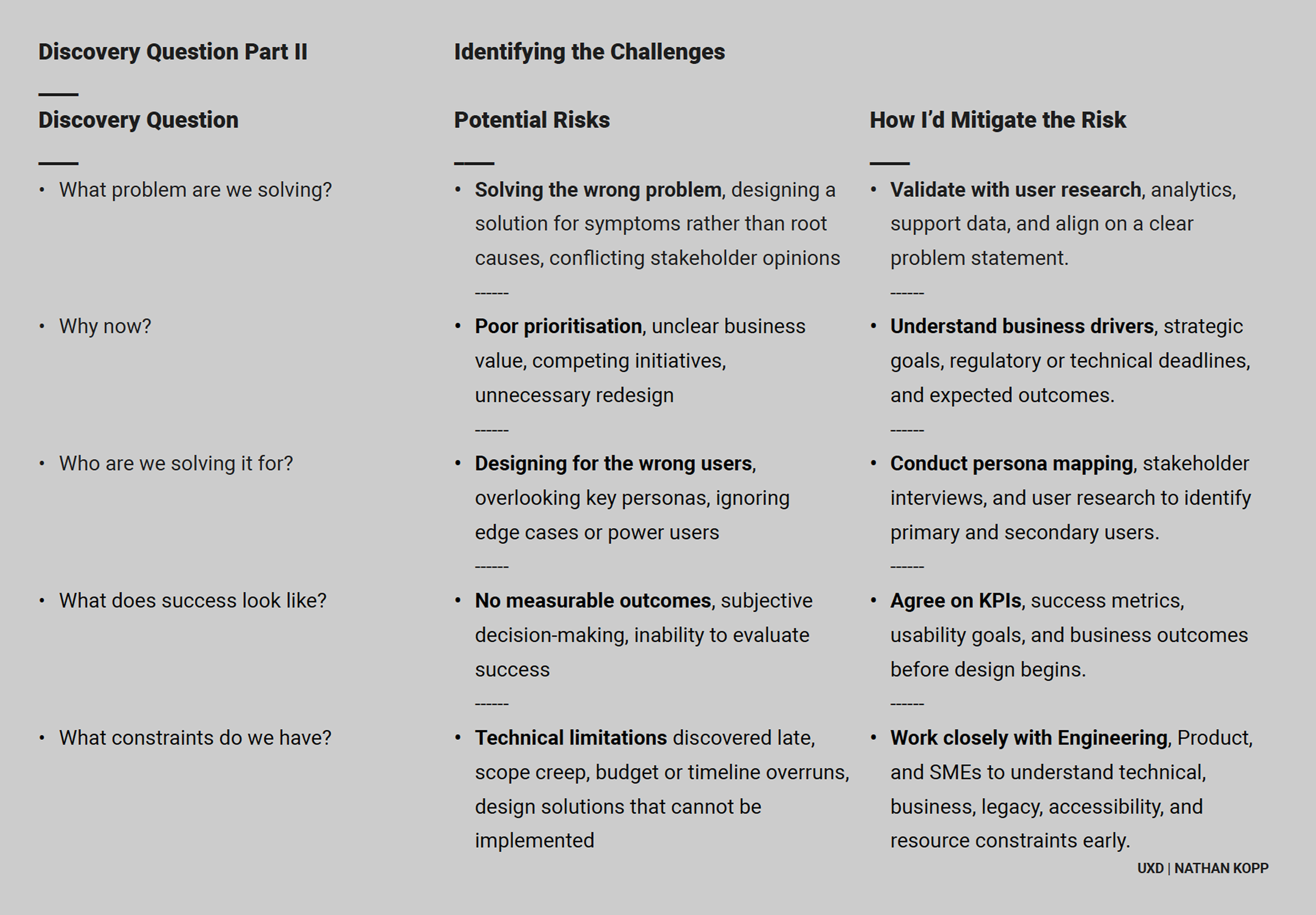
What problem are we solving?
Why now?
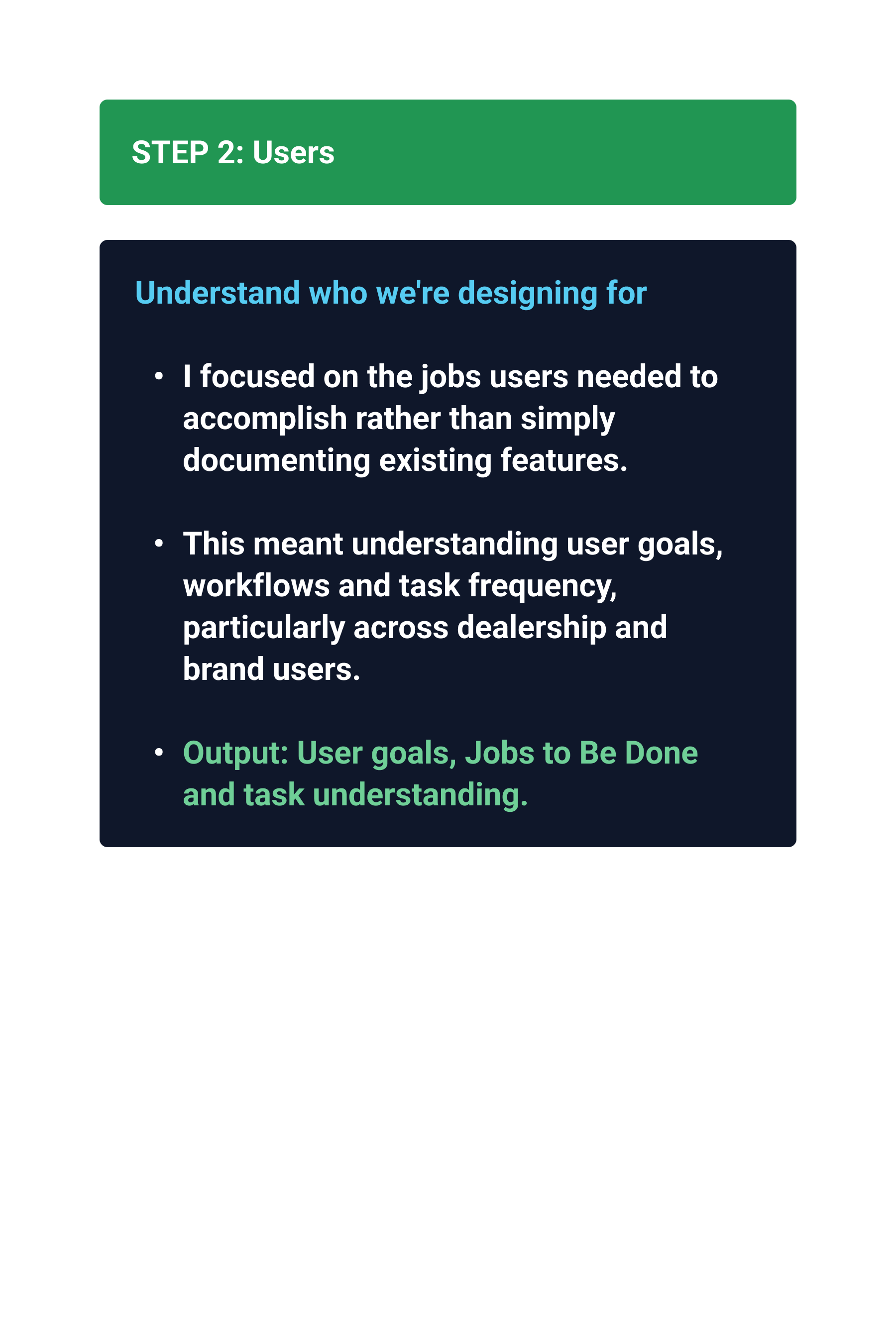
Who are we solving it for?
What does success look like?
What constraints do we have?
-
Business Problem Statement
Success Metrics: Improve task efficiency.
Reduce user errors, increase task success
Success: improve accessibility
Preserve user familiarity
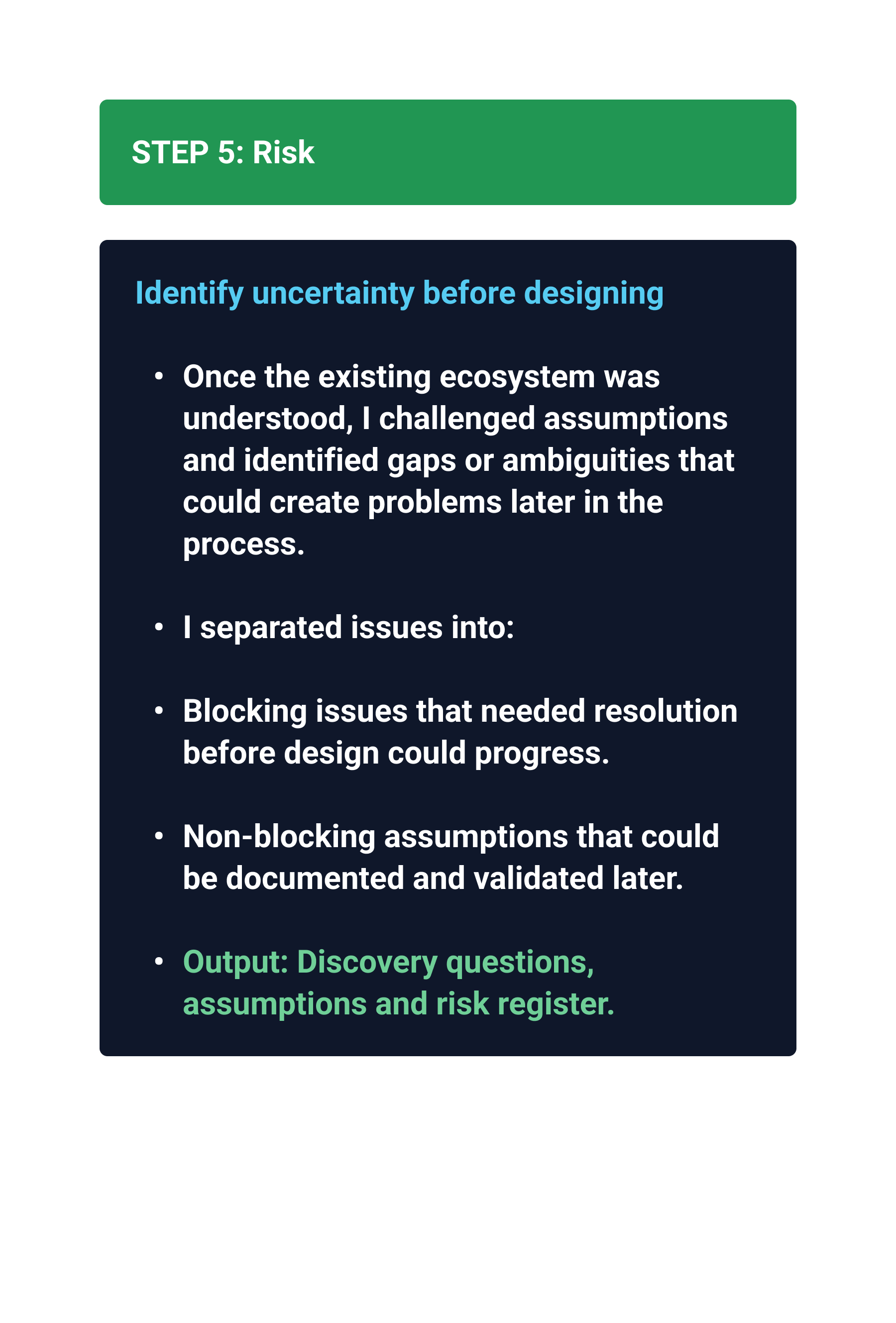
Clarify assumptions
Understand risks
Design Thinking
Reverse Engineering Before Design
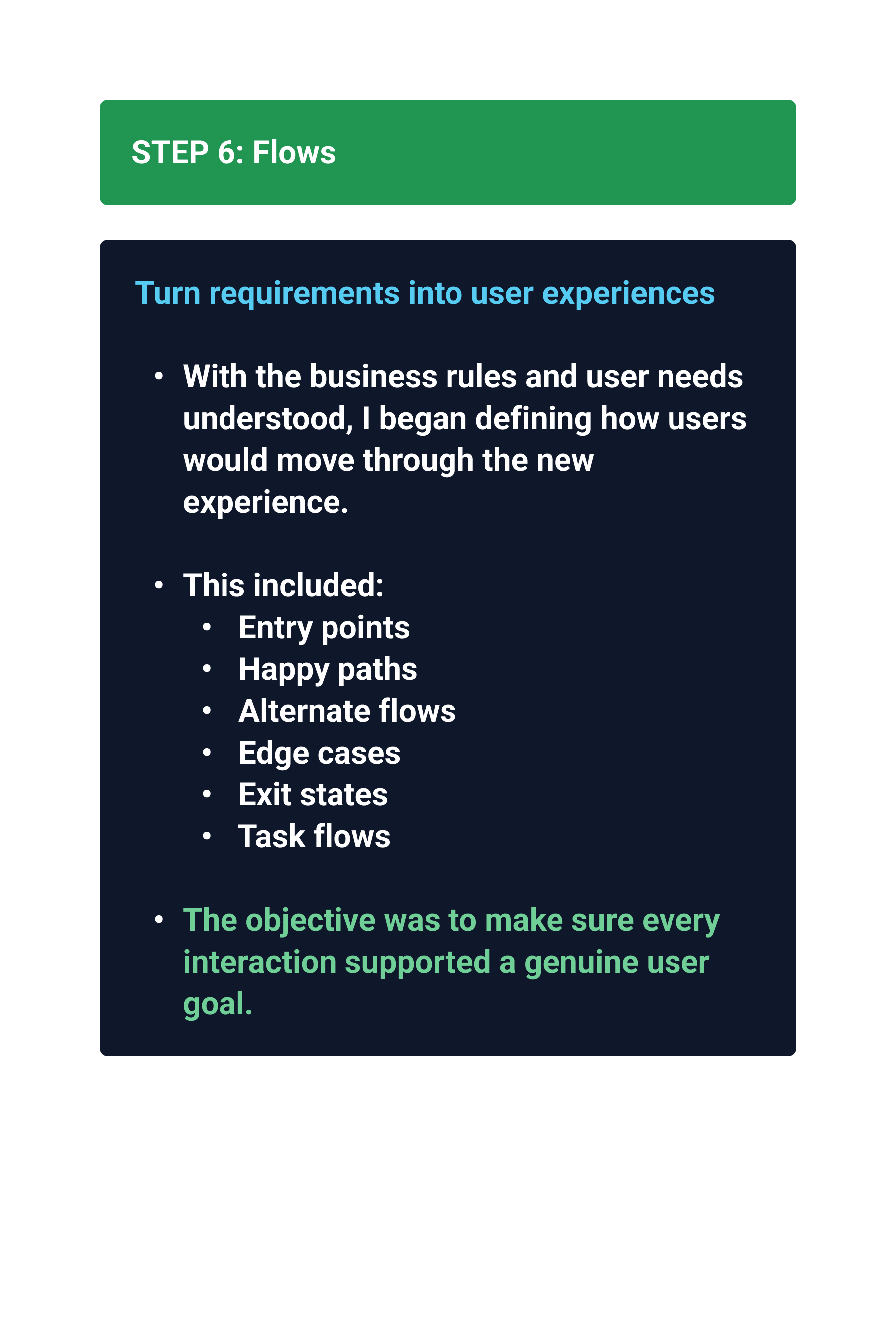
From 142 Screens
to a System
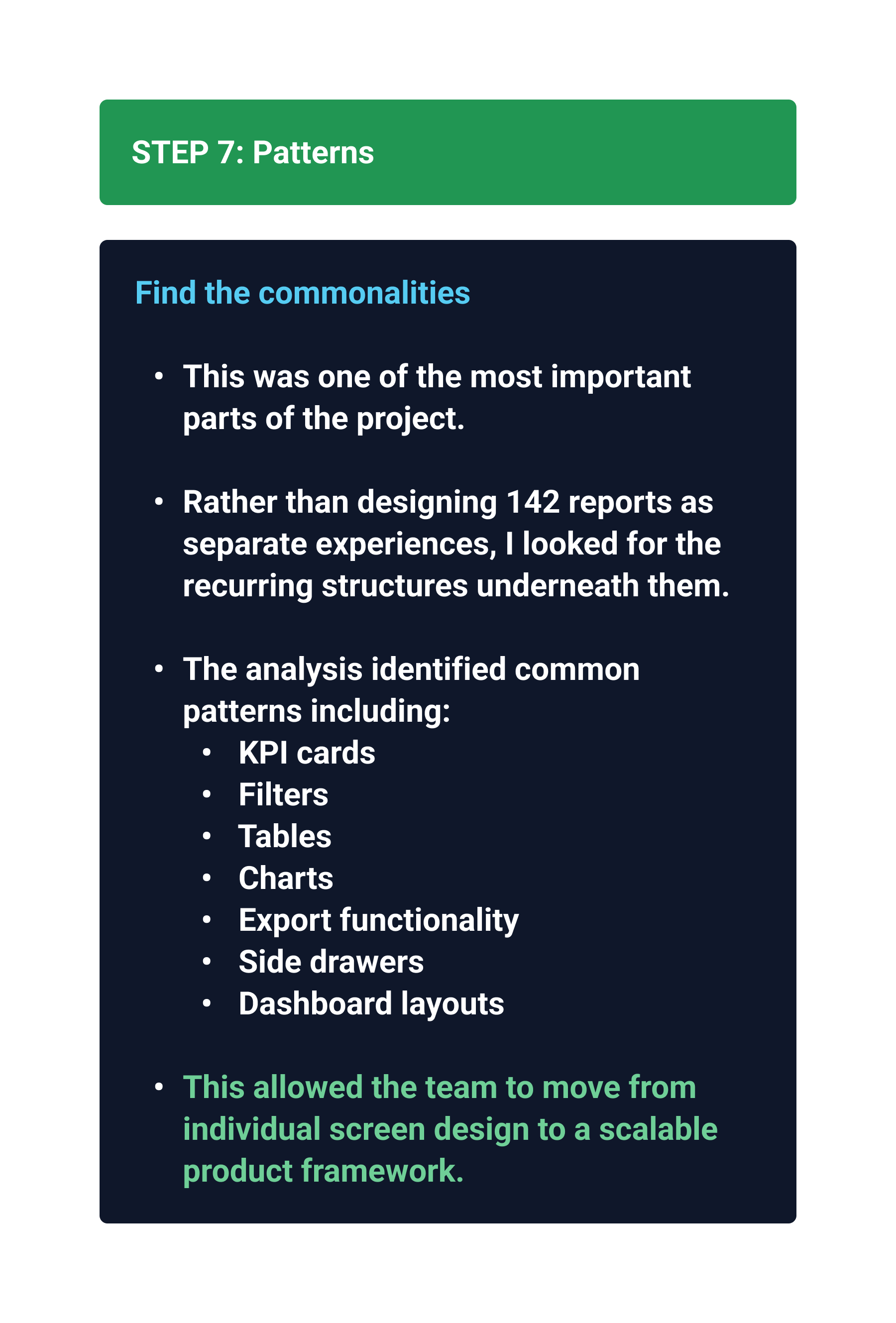
142 experiences
Common structures
Reusable patterns
Scalable framework
Pattern Library
KPI cards
Tables
Filters
Charts
Side drawers
Dashboard layouts
Export actions
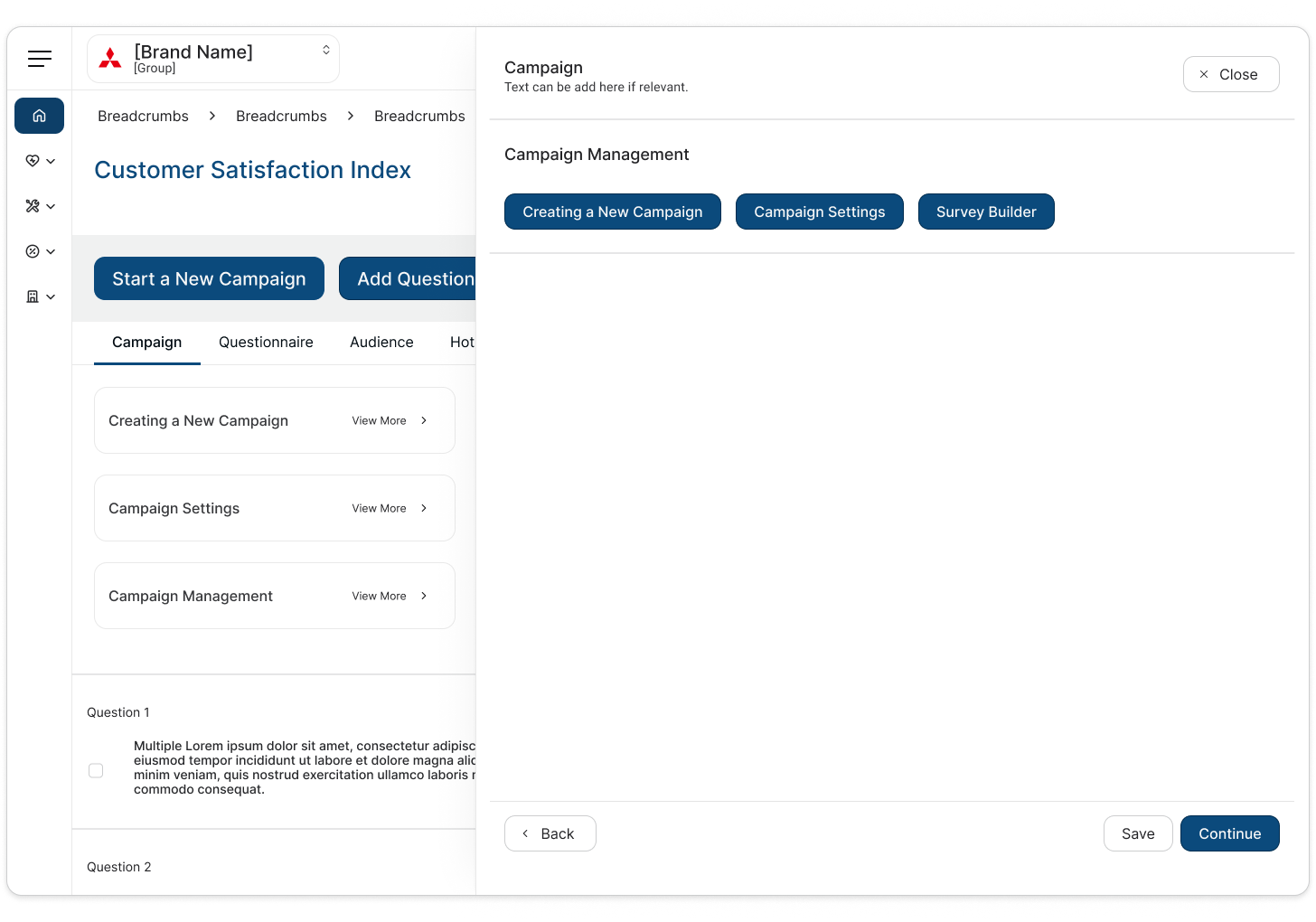
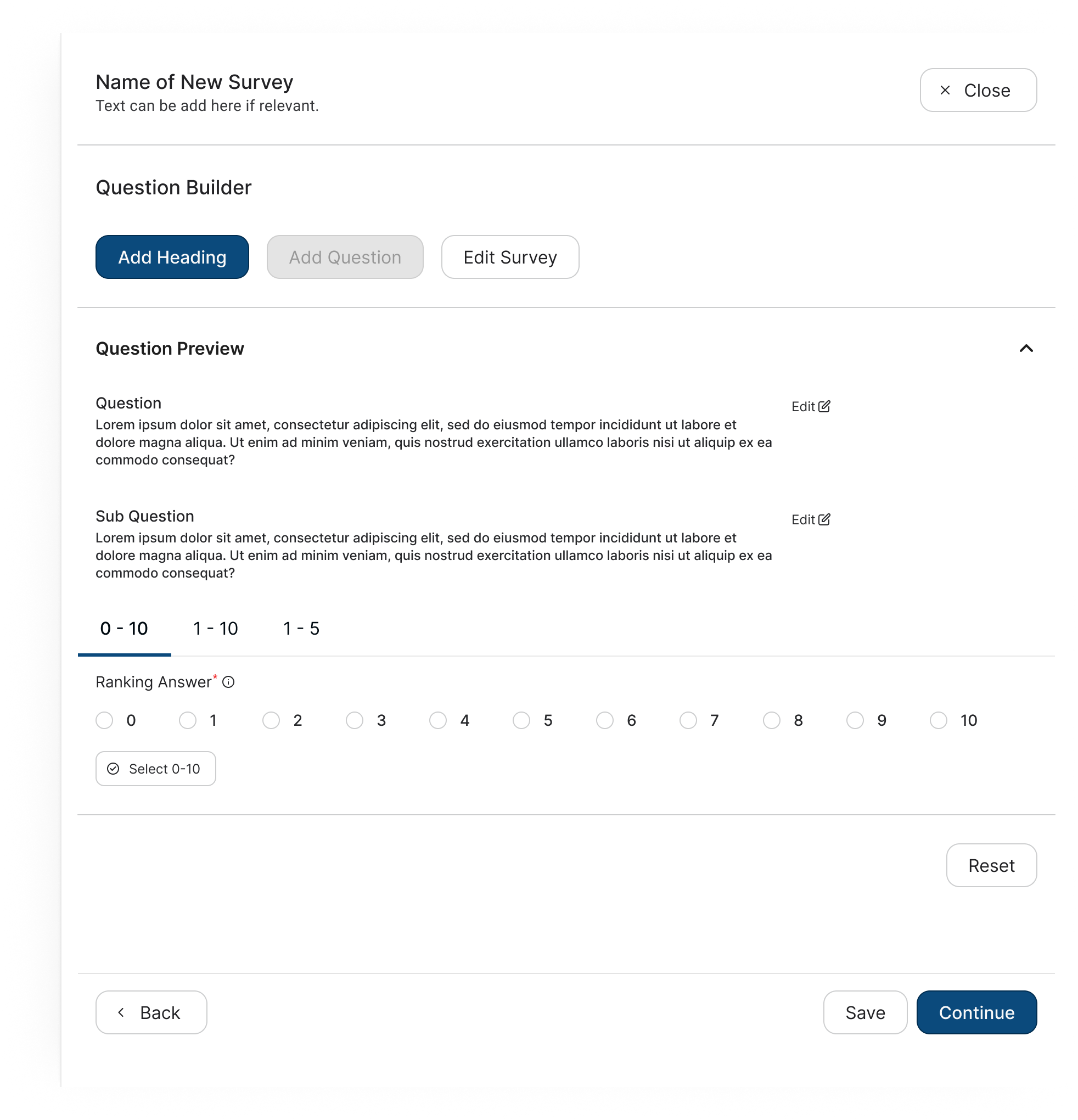
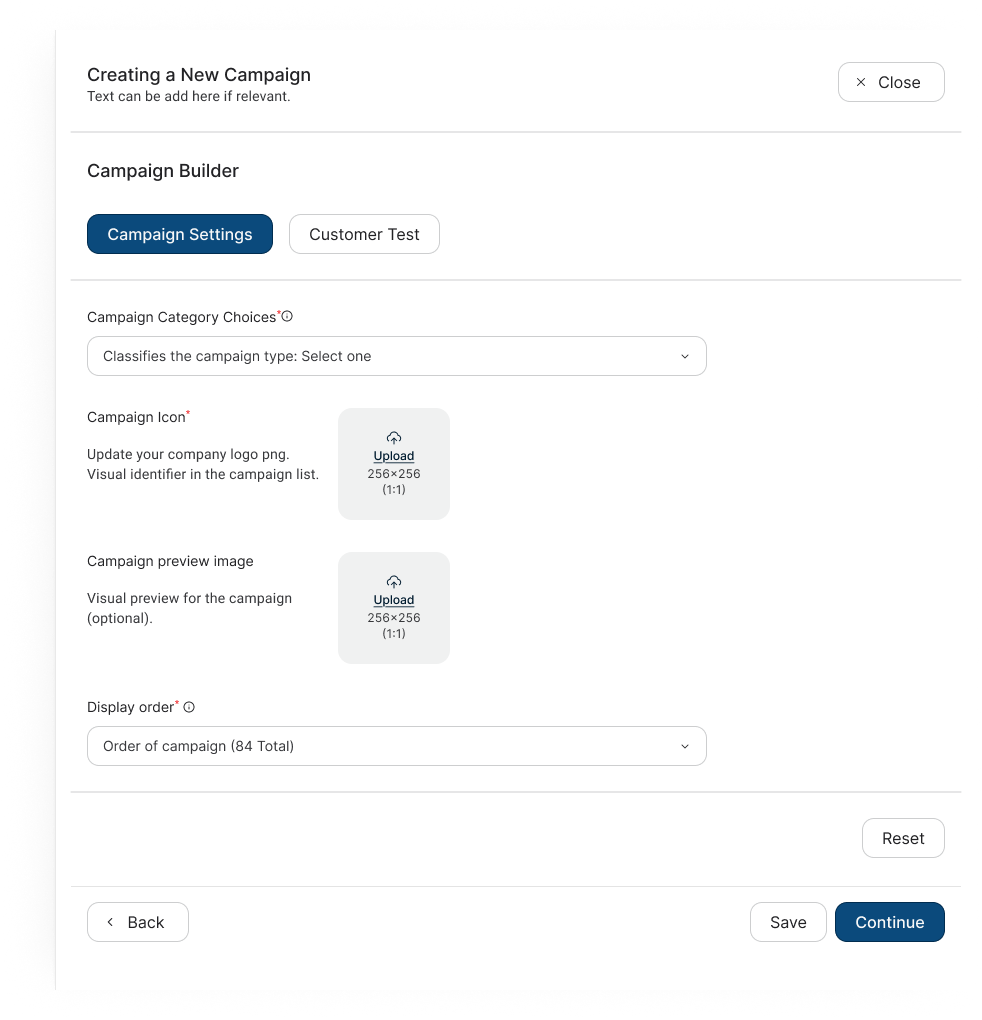
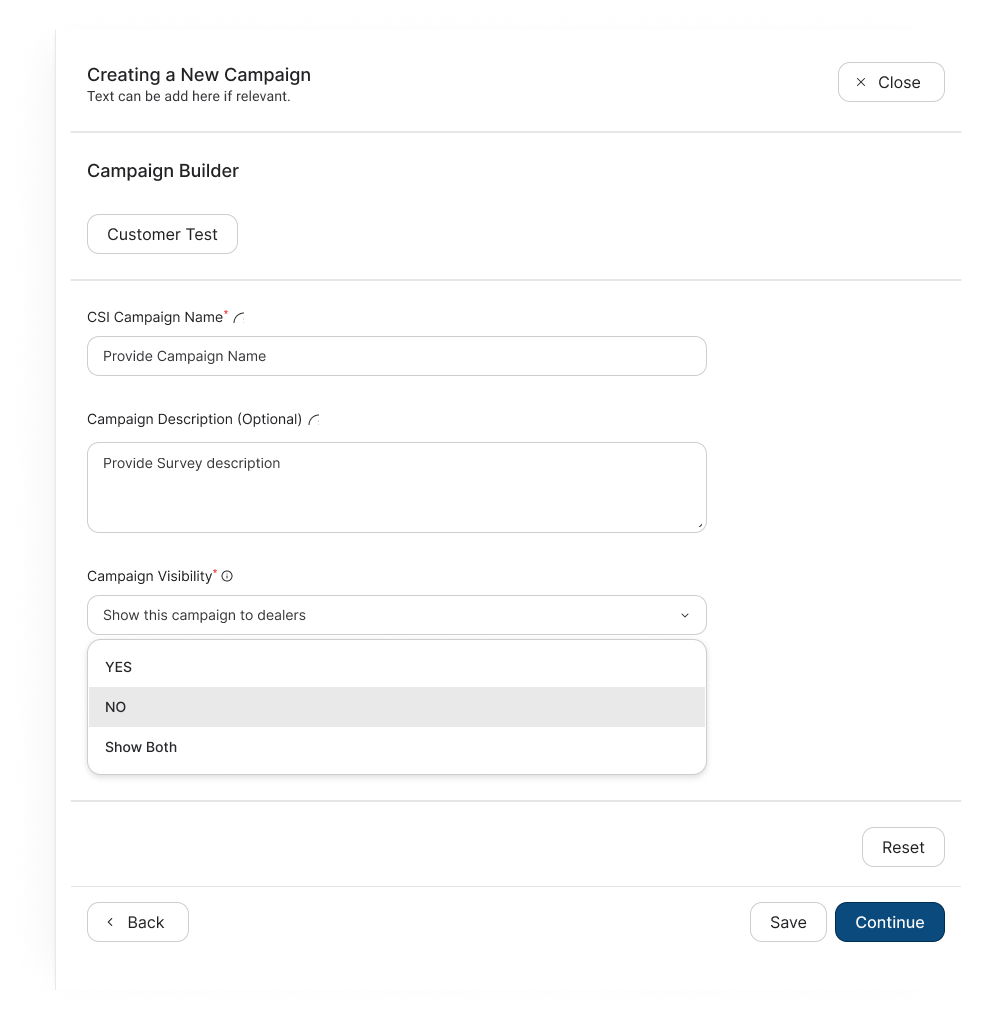
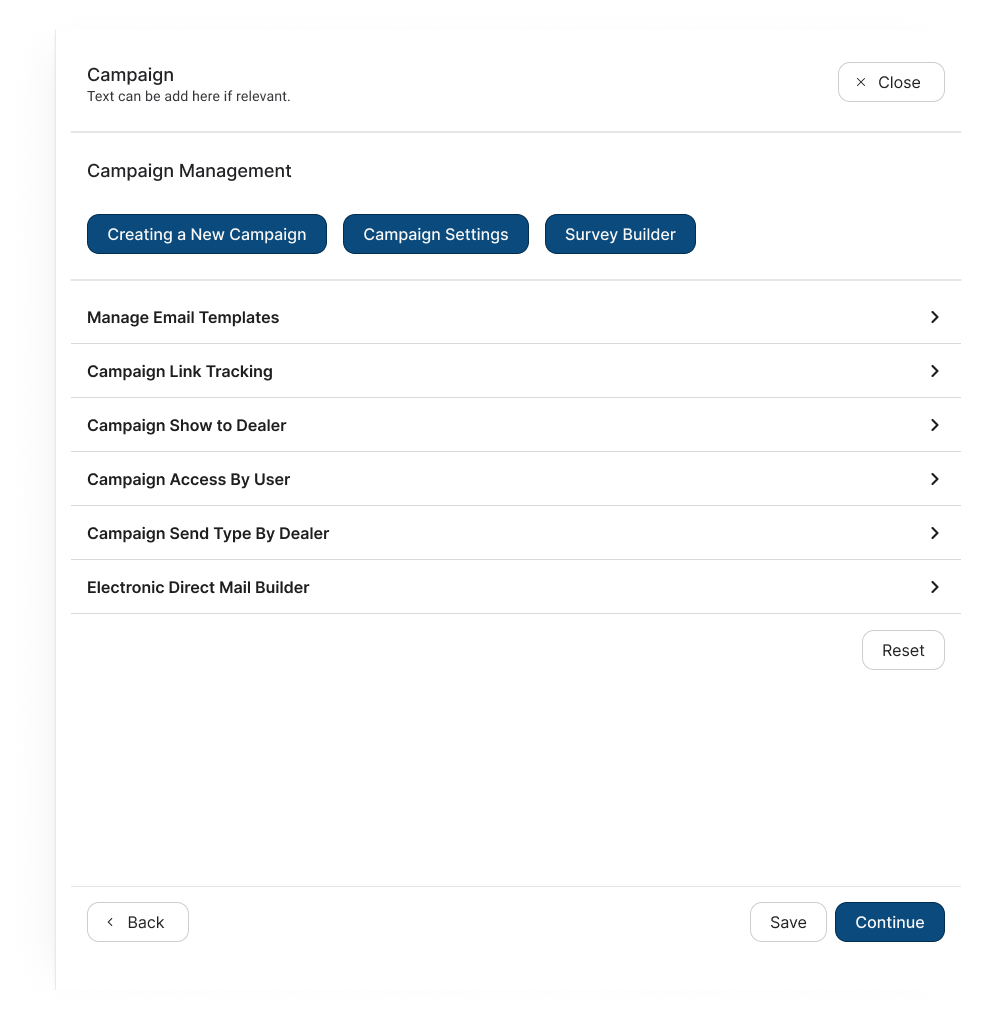
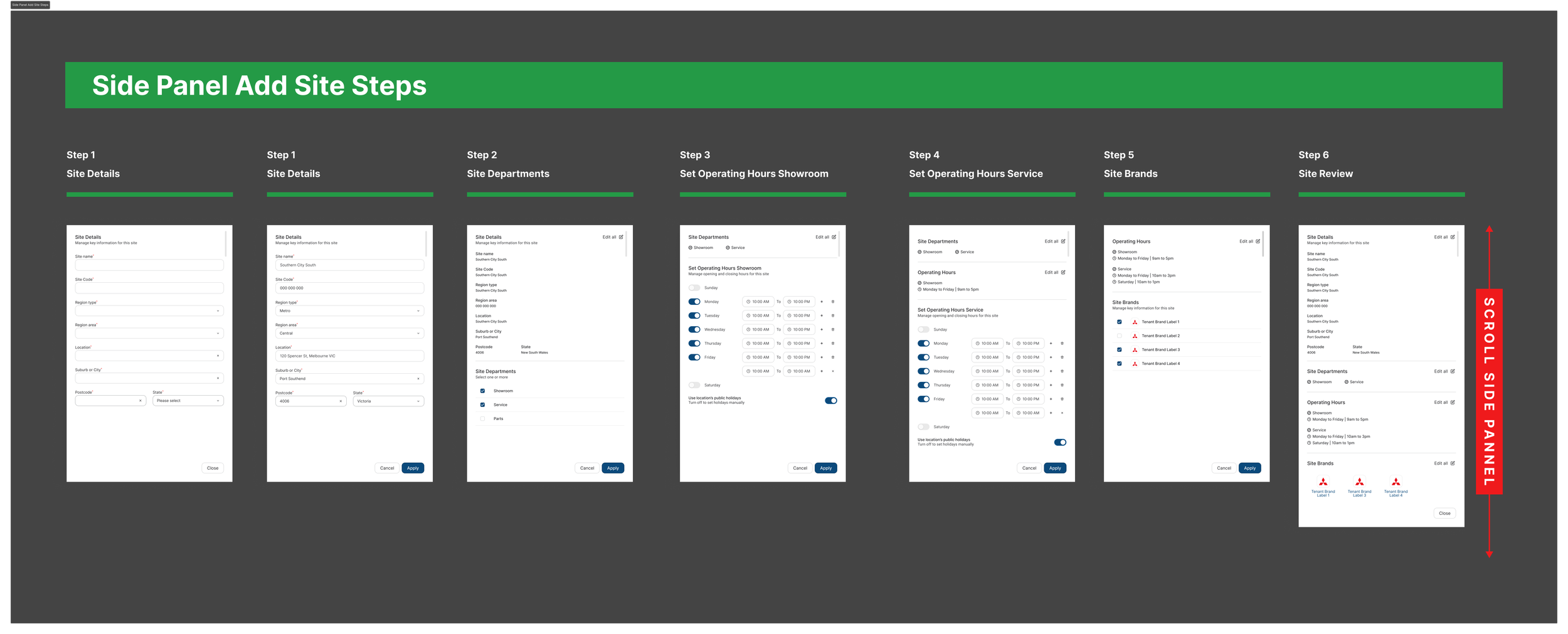
Before
Legacy Platform
Legacy platform
Fragmented
Inconsistent
Tenant-specific
Difficult to understand
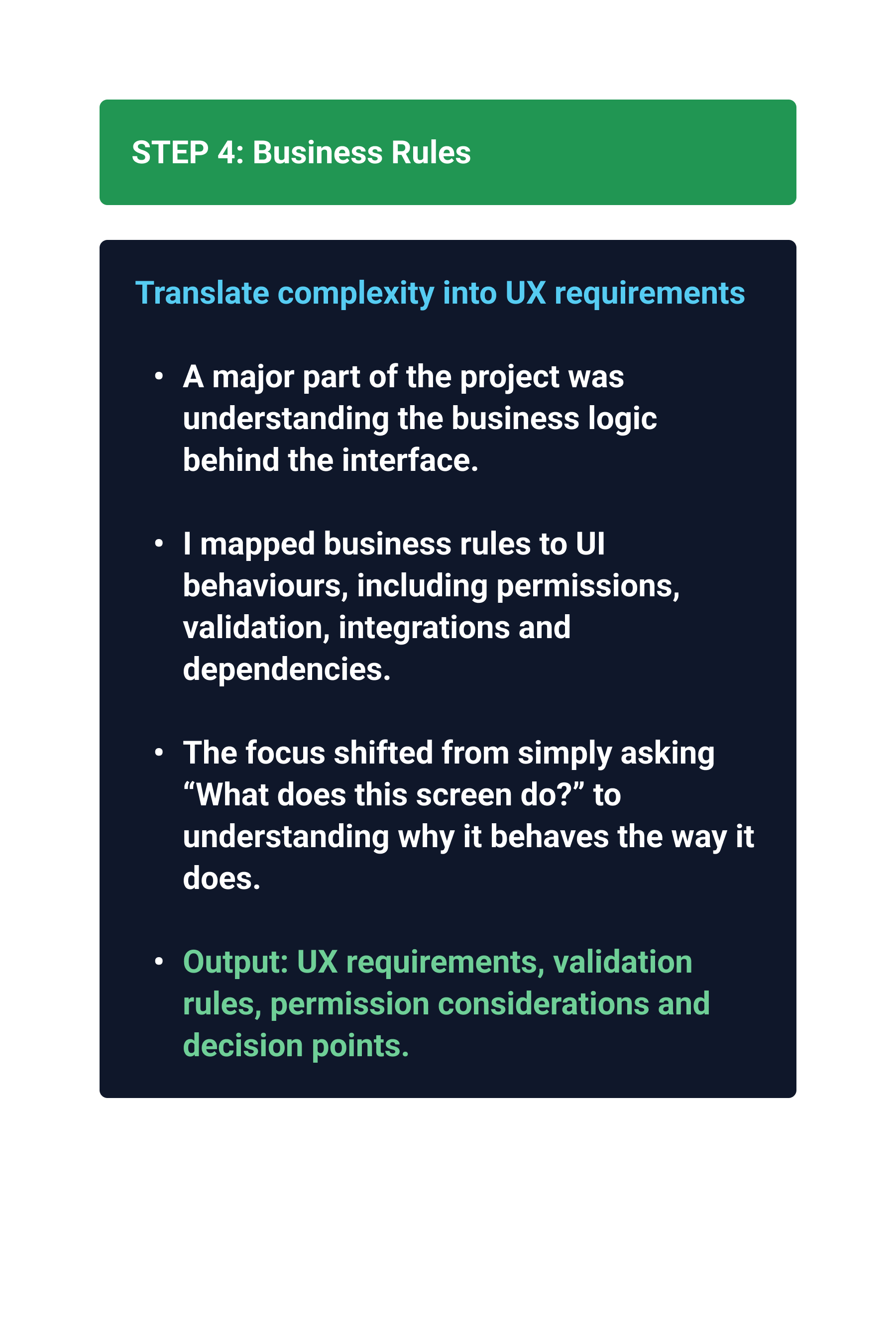
Business logic hidden in UI
After
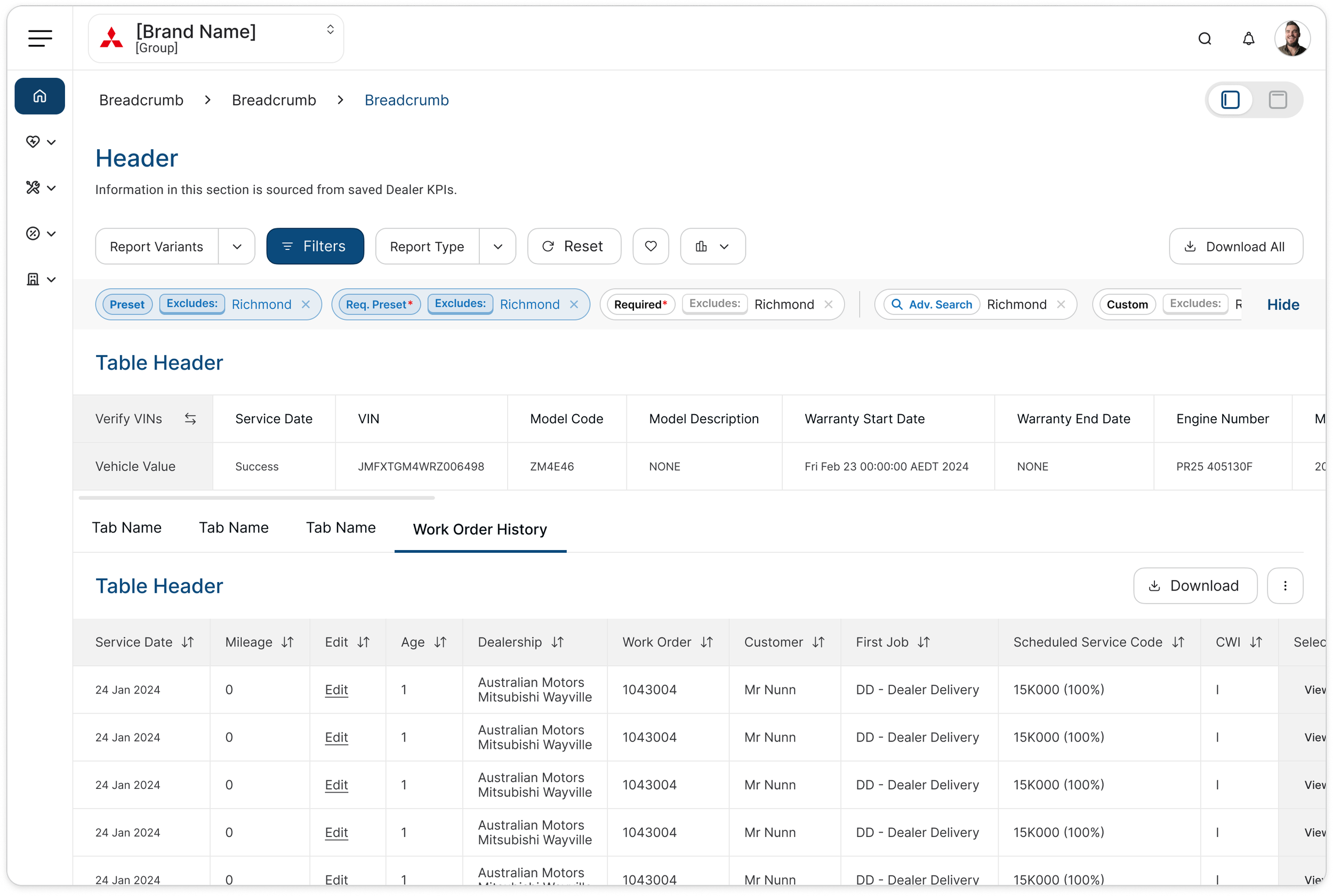
New Platform
Scalable Product Framework
Consistent interaction patterns
Reusable components
Clearer behaviours
Preserved business logic
Foundation for future modules
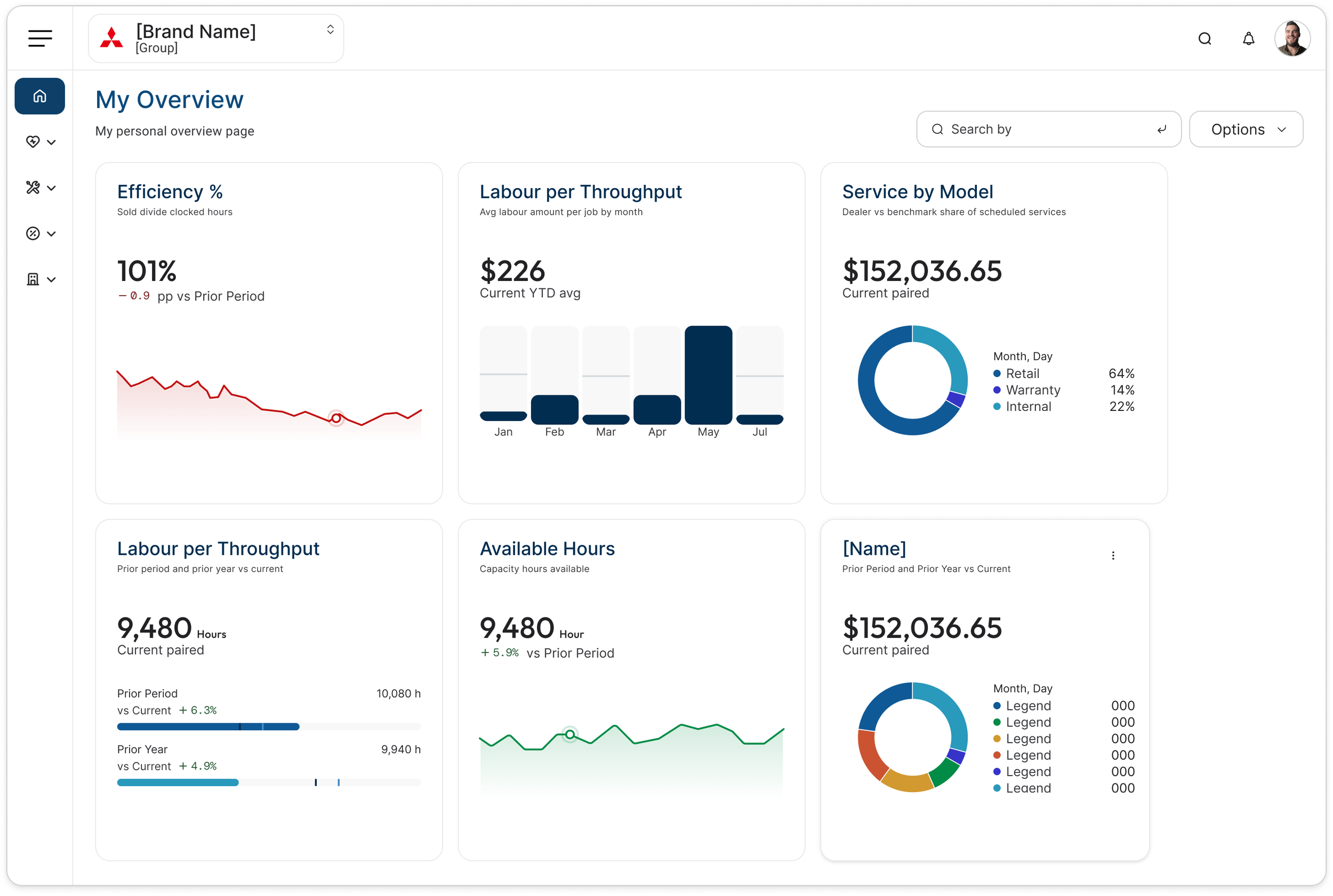
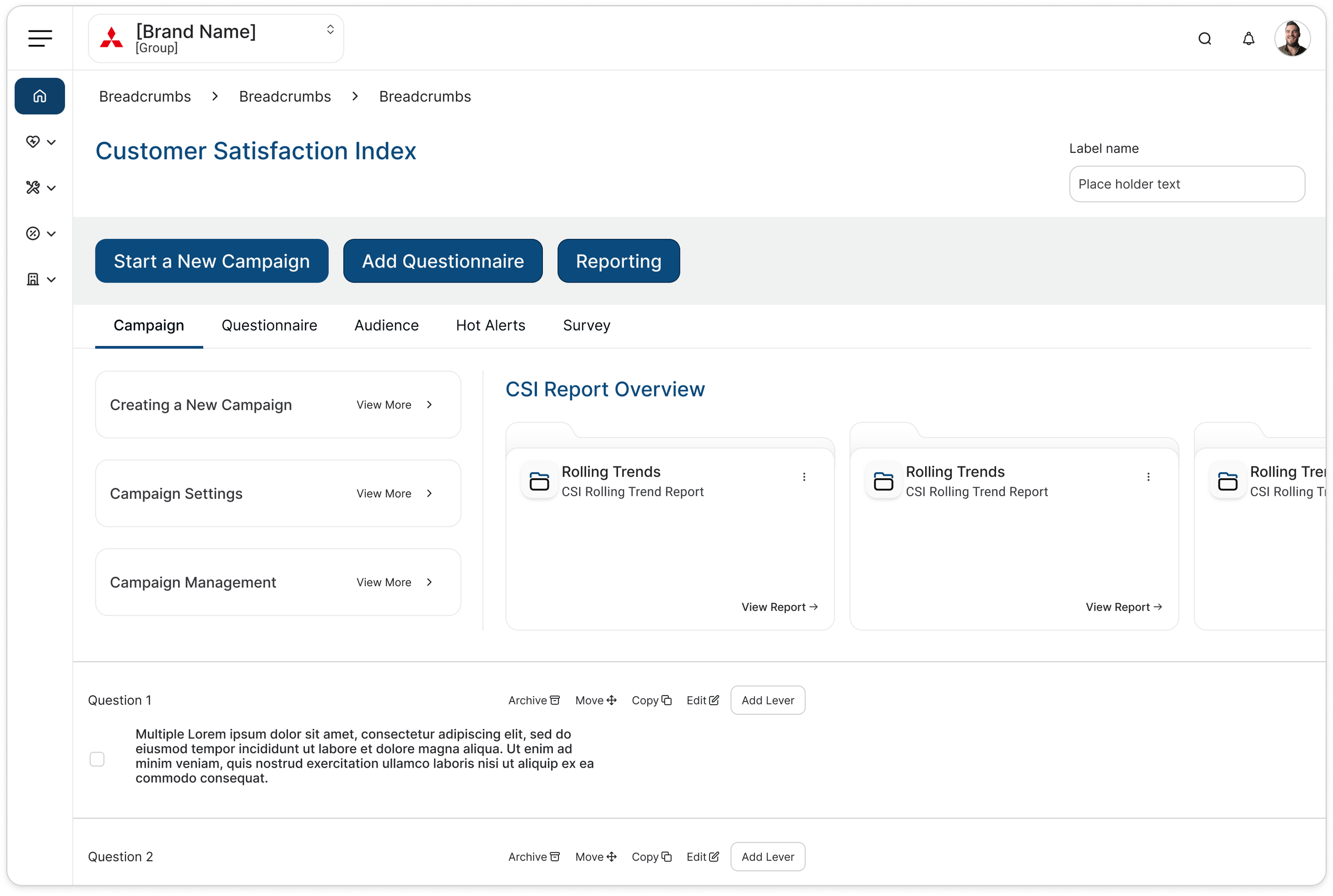
Design System
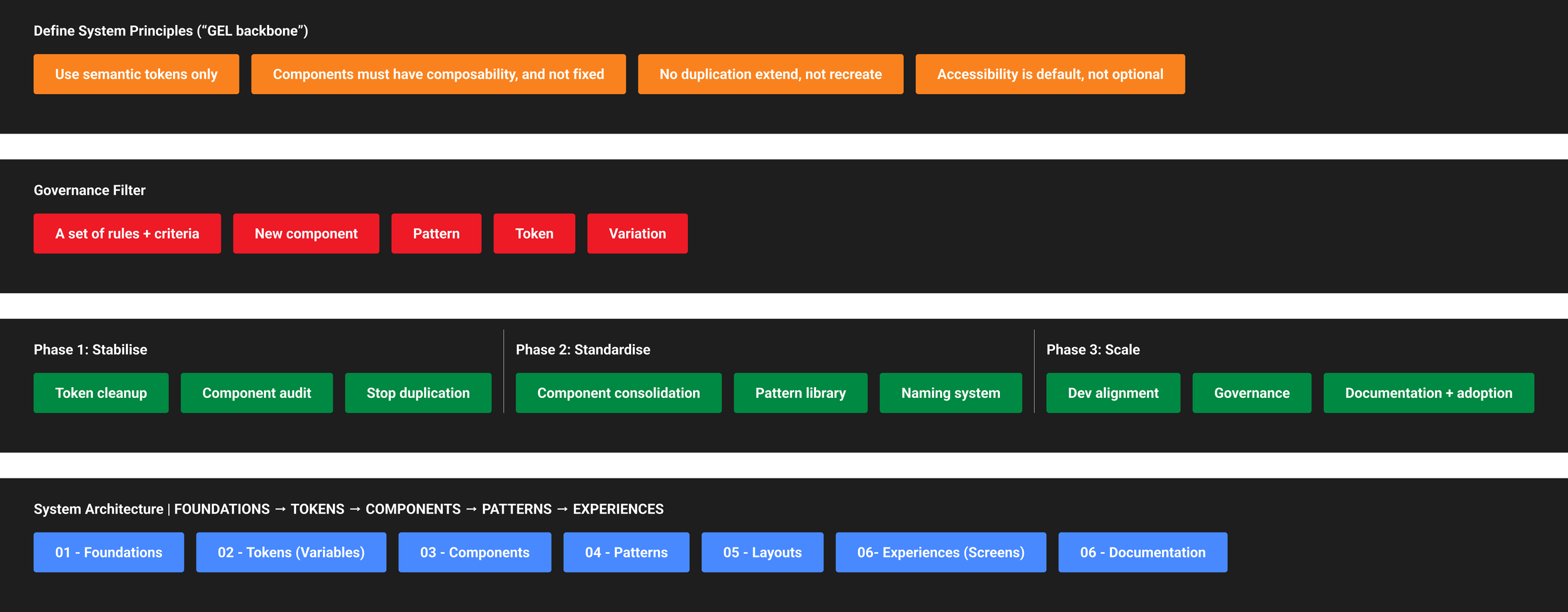
Way of Working
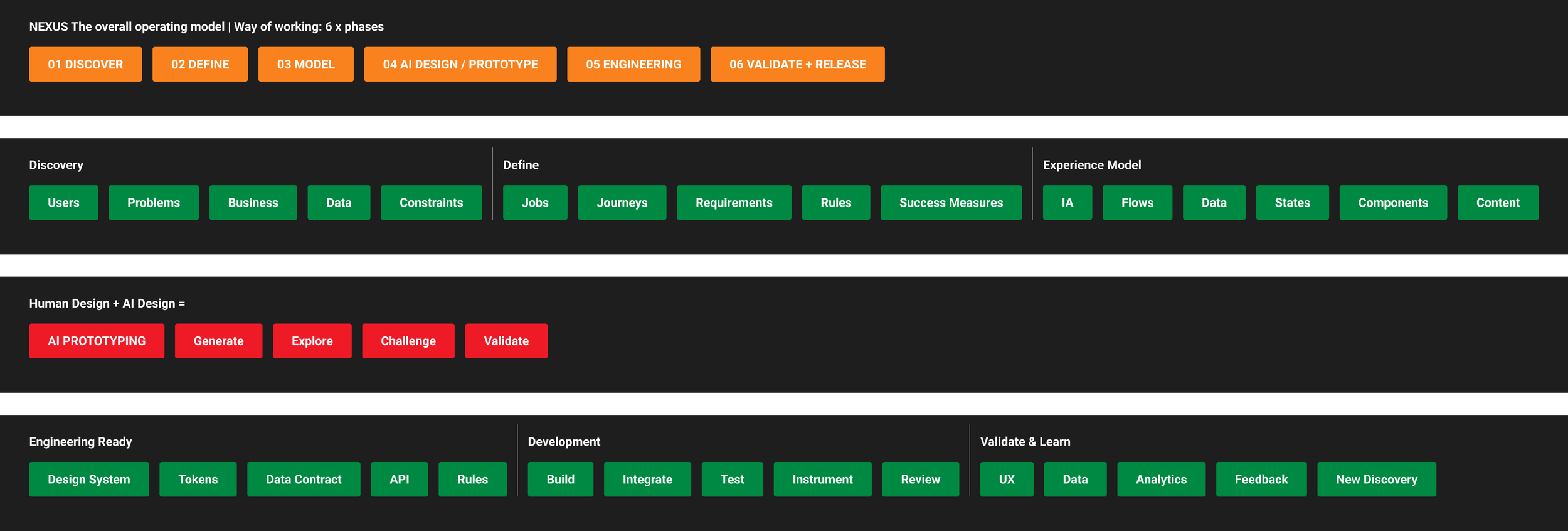
Infomedia:
What I learned
Three big lessons:
1. Understand before you simplify
You can't simplify a complex enterprise product without understanding why it's complex.
2. Patterns are more valuable than screens
The real design output wasn't 142 redesigned reports;
it was the framework underneath them.
3. AI is most powerful when paired with design judgement
AI helped accelerate analysis and discovery, but decisions still required UX reasoning, stakeholder knowledge and product understanding.
CASE STUDY 02 | Ramsay Health Care
The Challenge
A fragmented healthcare digital ecosystem.
-
→ Users struggle to find information
-
→ Experience feels fragmented
-
→ Teams create inconsistently
-
→ Users work harder
-
→ Every change costs more

Information Architecture first
Structure before surface.
Understand business objectives
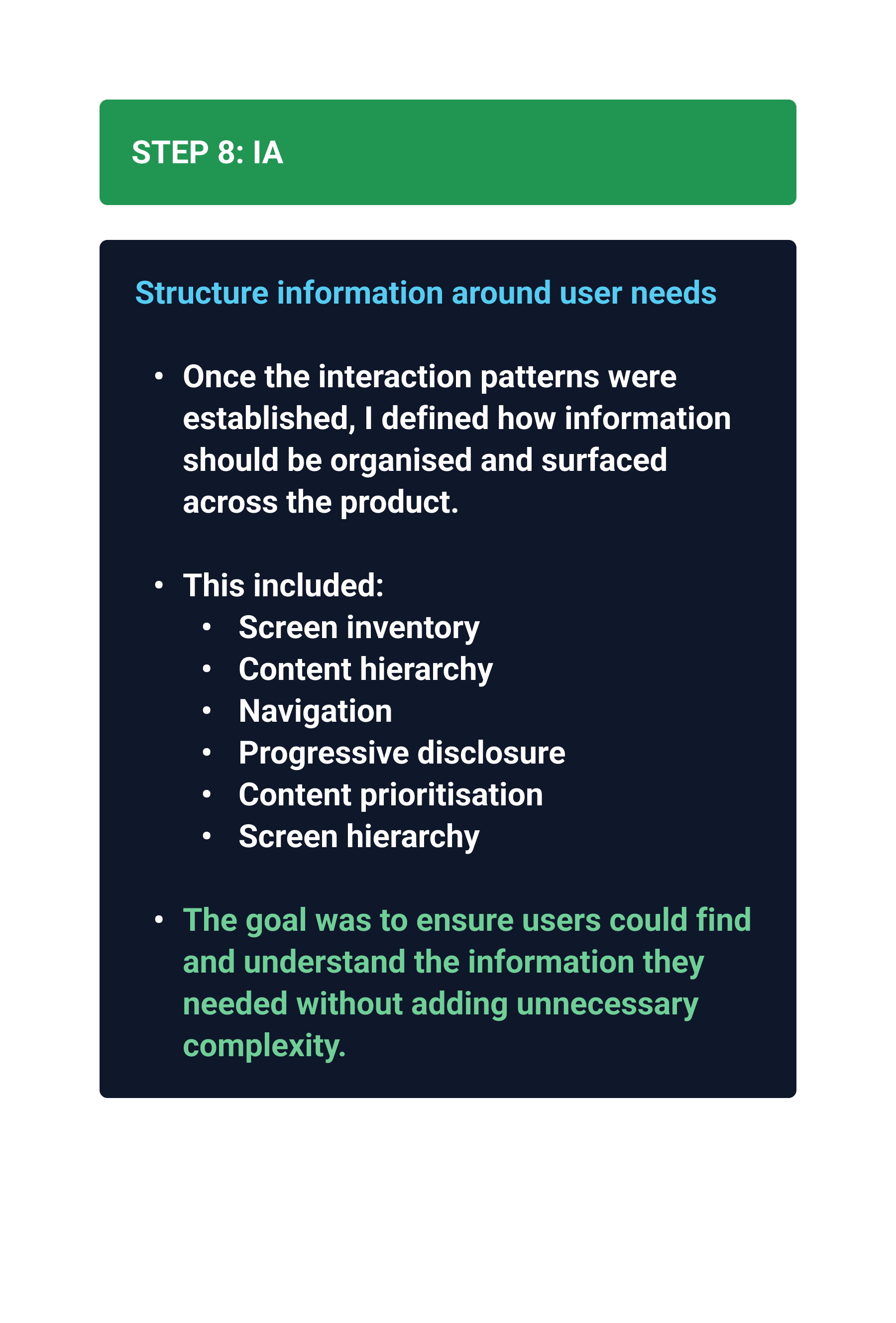
Identify priority user journeys
Audit existing content
Redesign IA
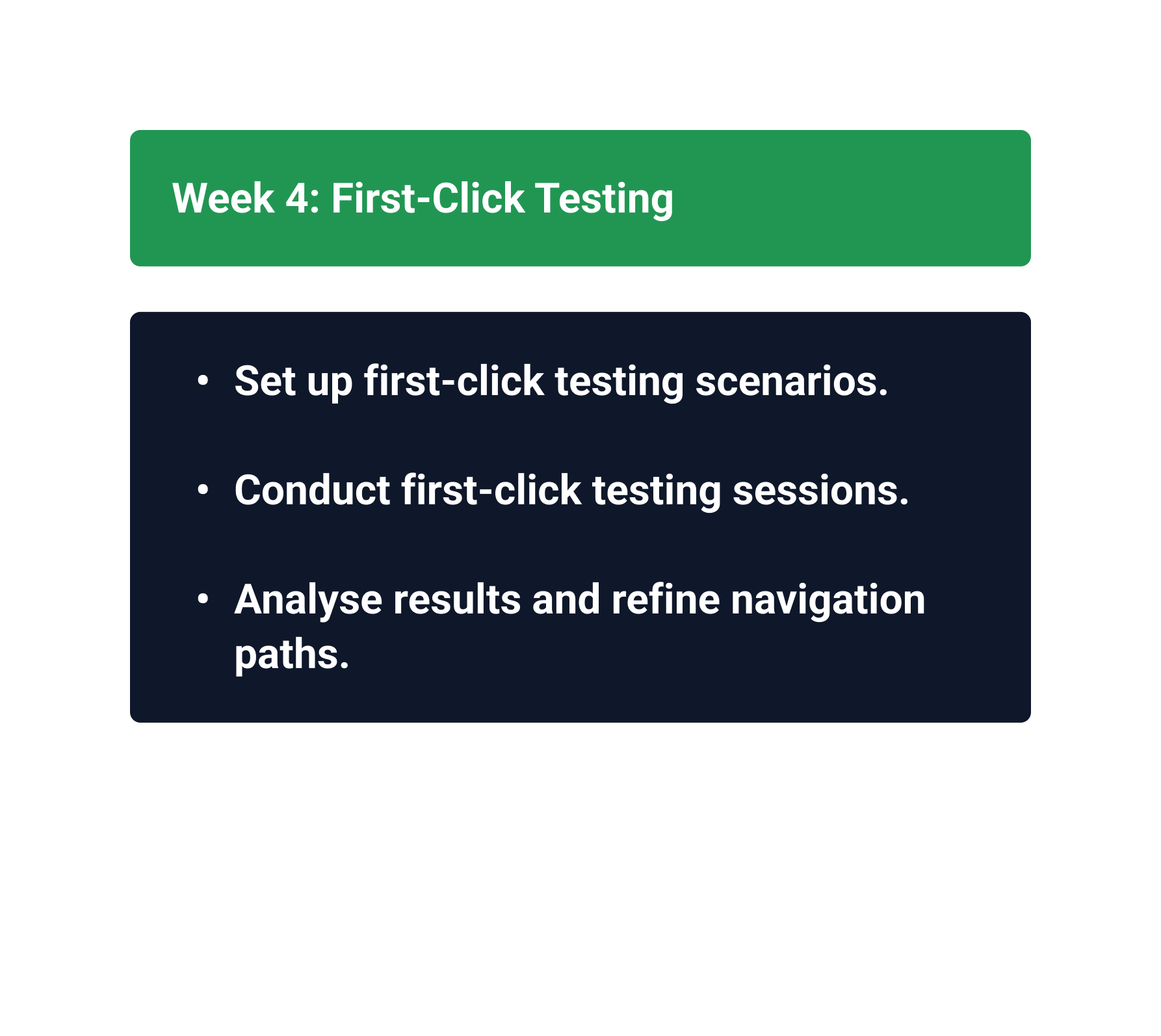
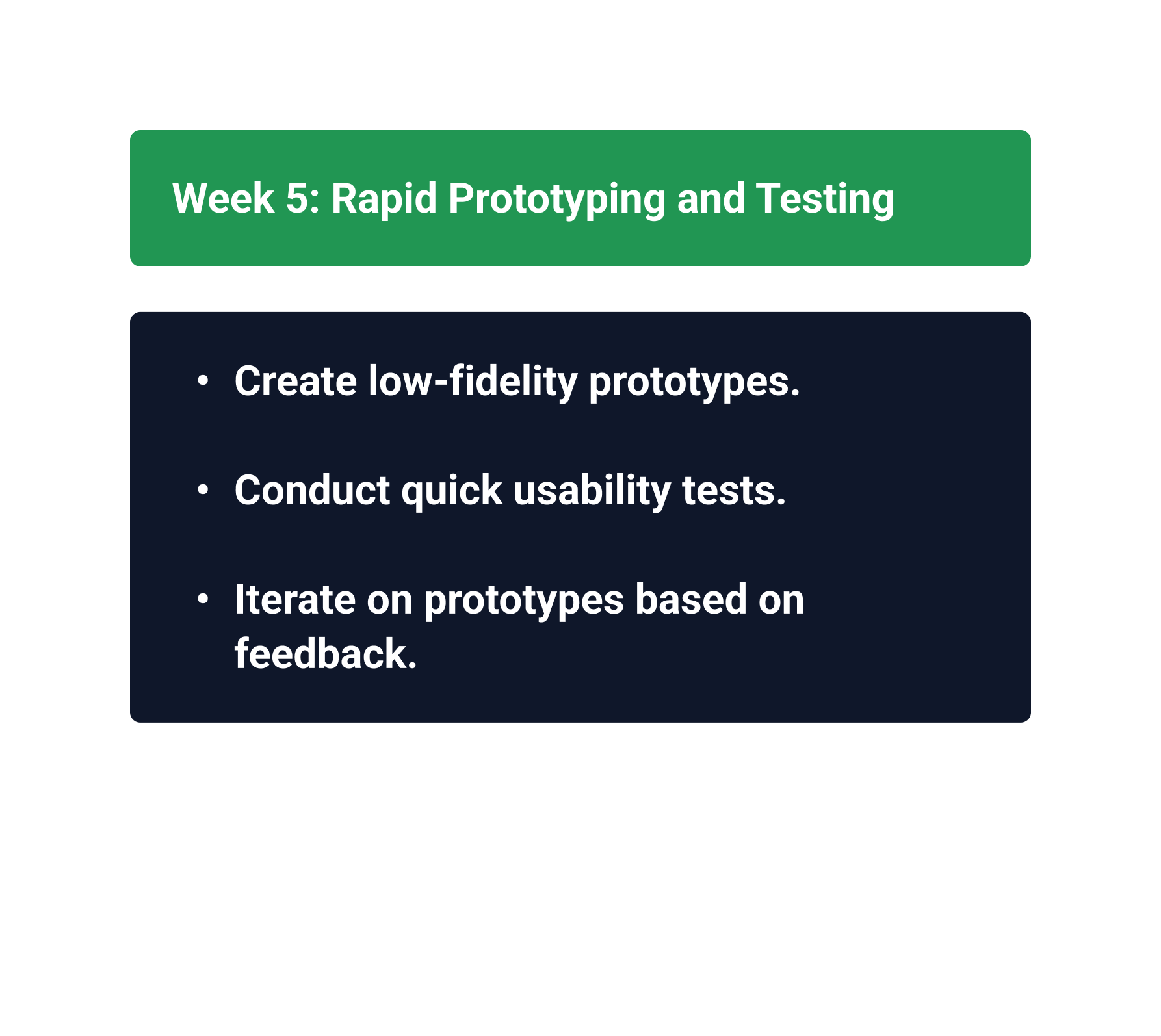
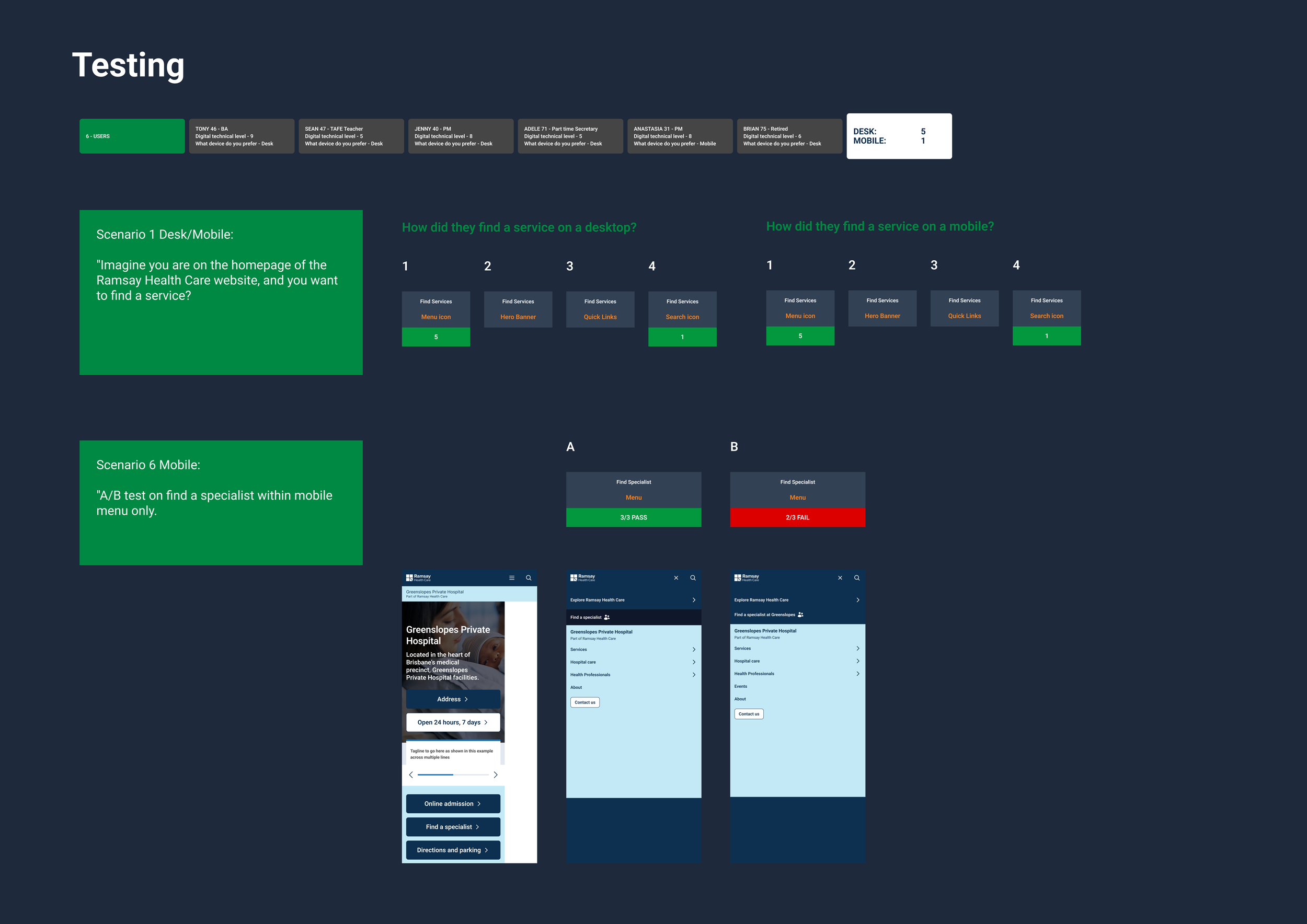
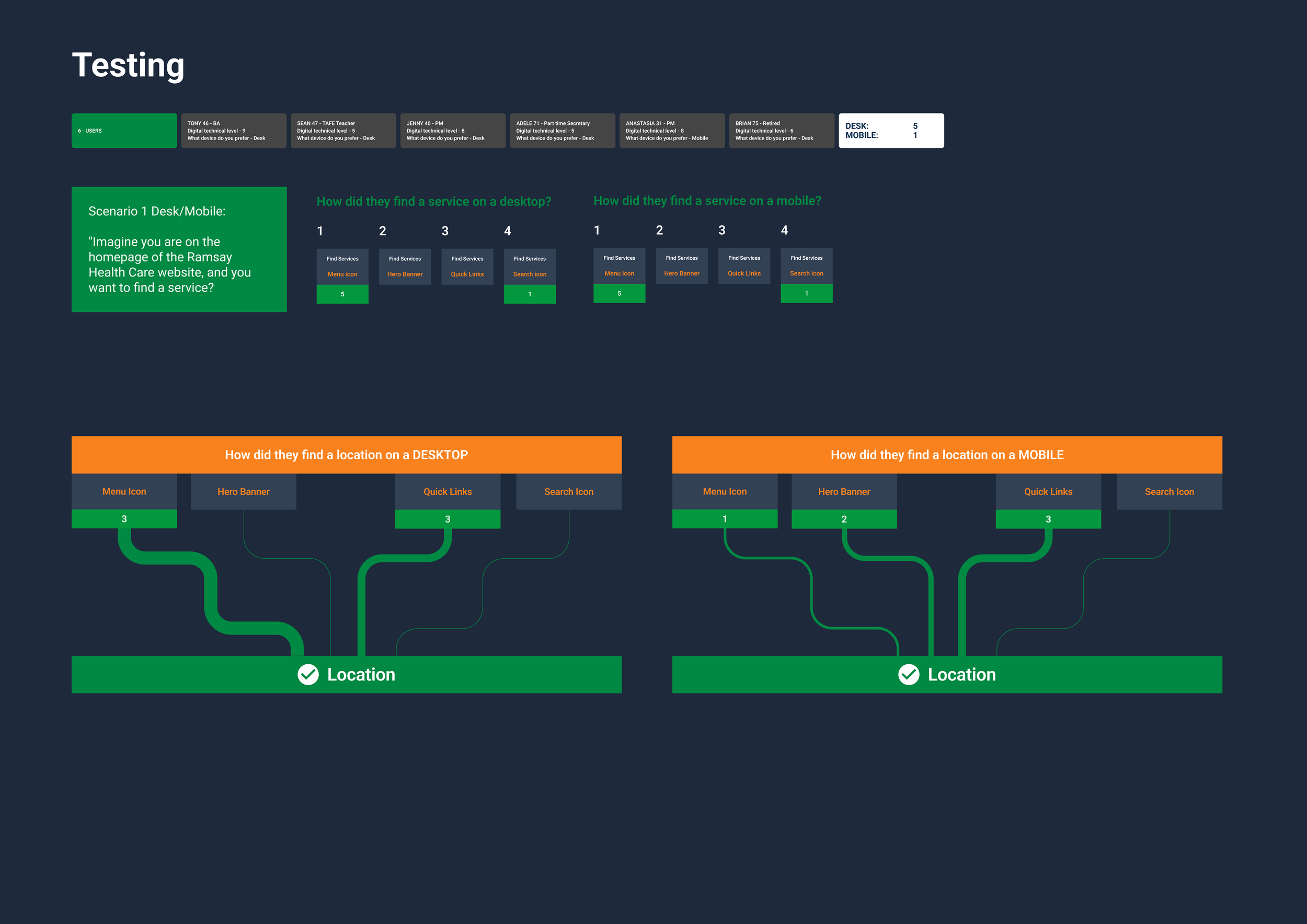
Test terminology and findability
Validate navigation
Then move into visual design
-
Find a hospital
Find a specialist
Find a service
Book an appointment
Understand treatment
Find quality & safety information
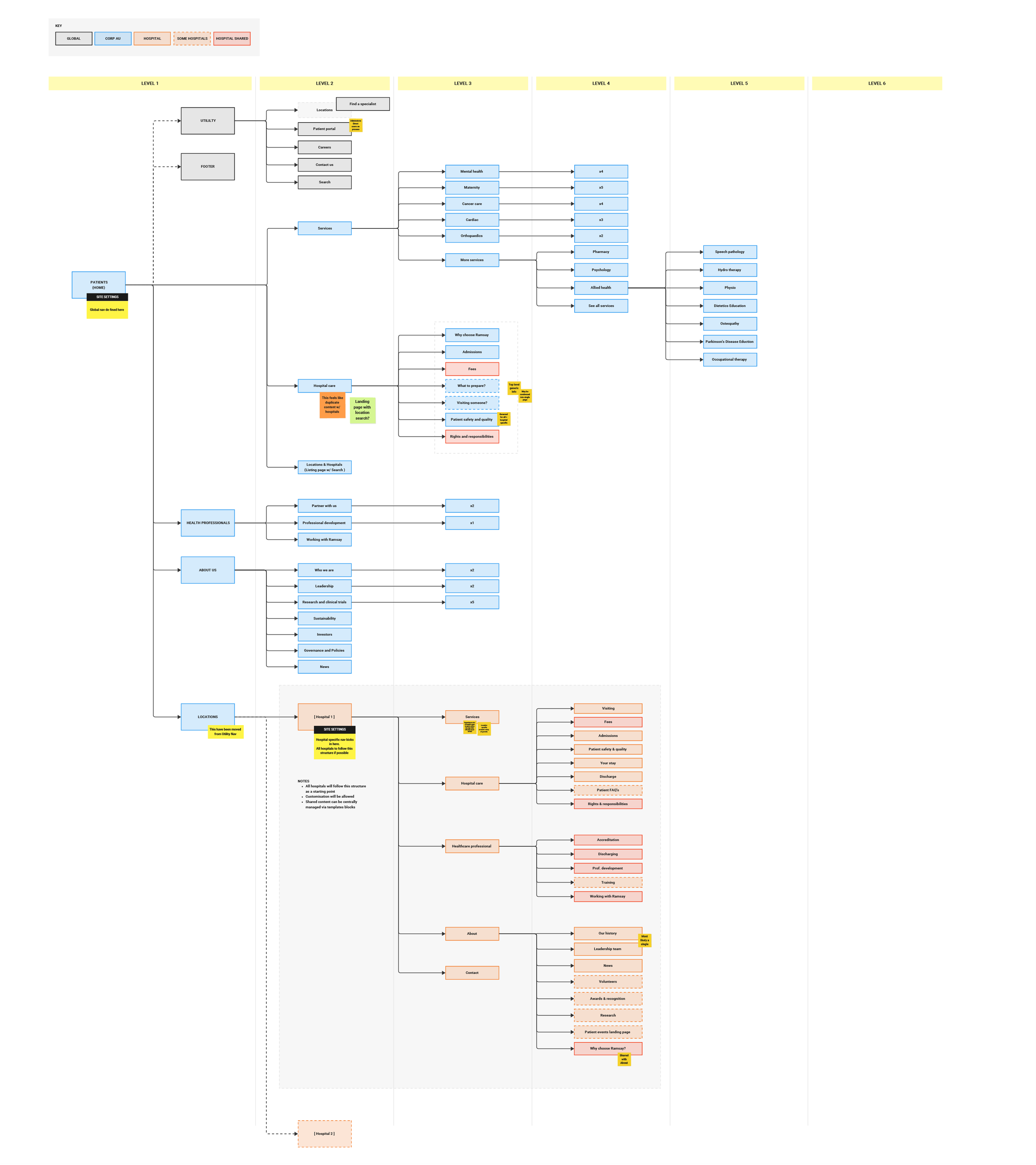
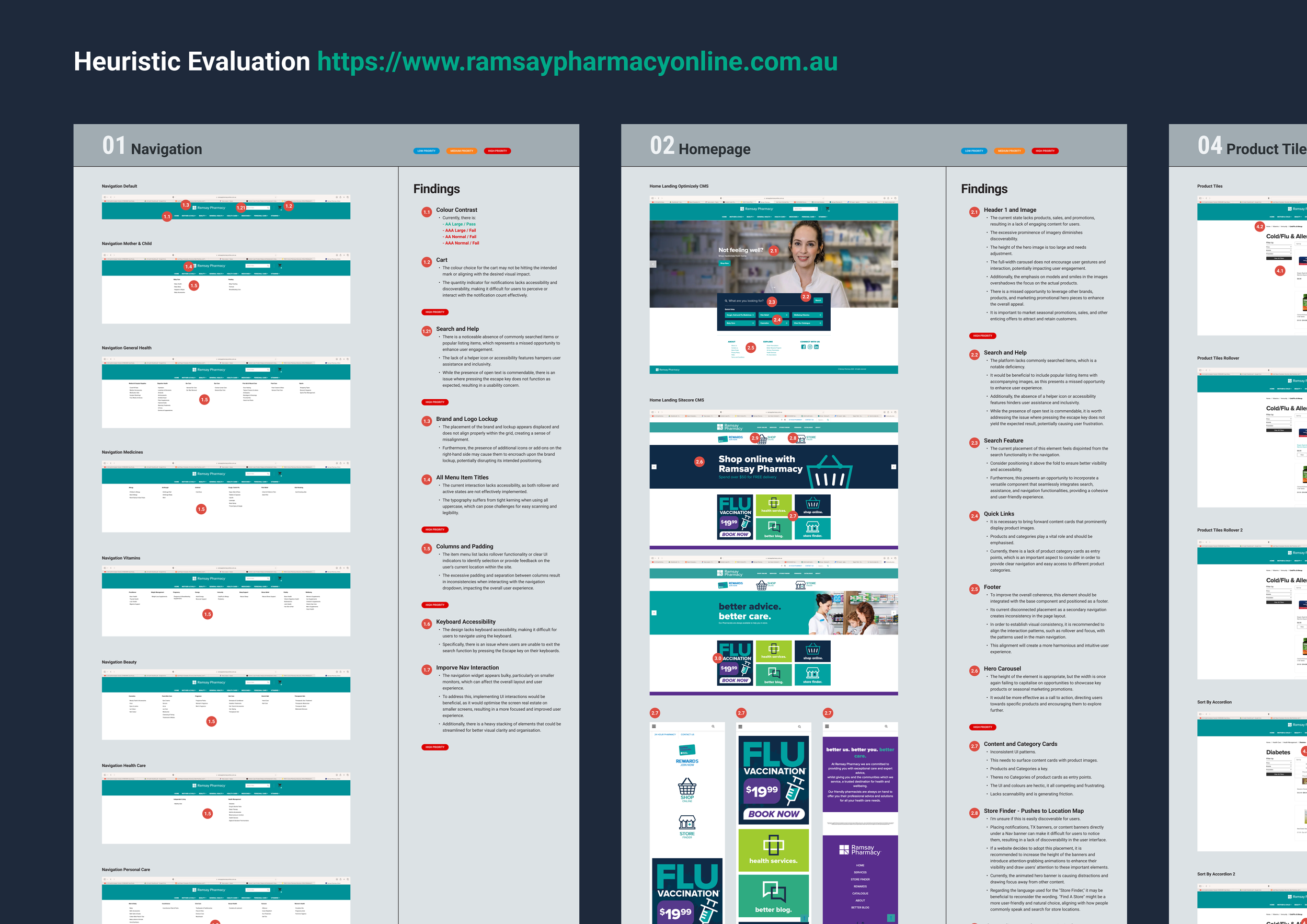
Information Architecture first
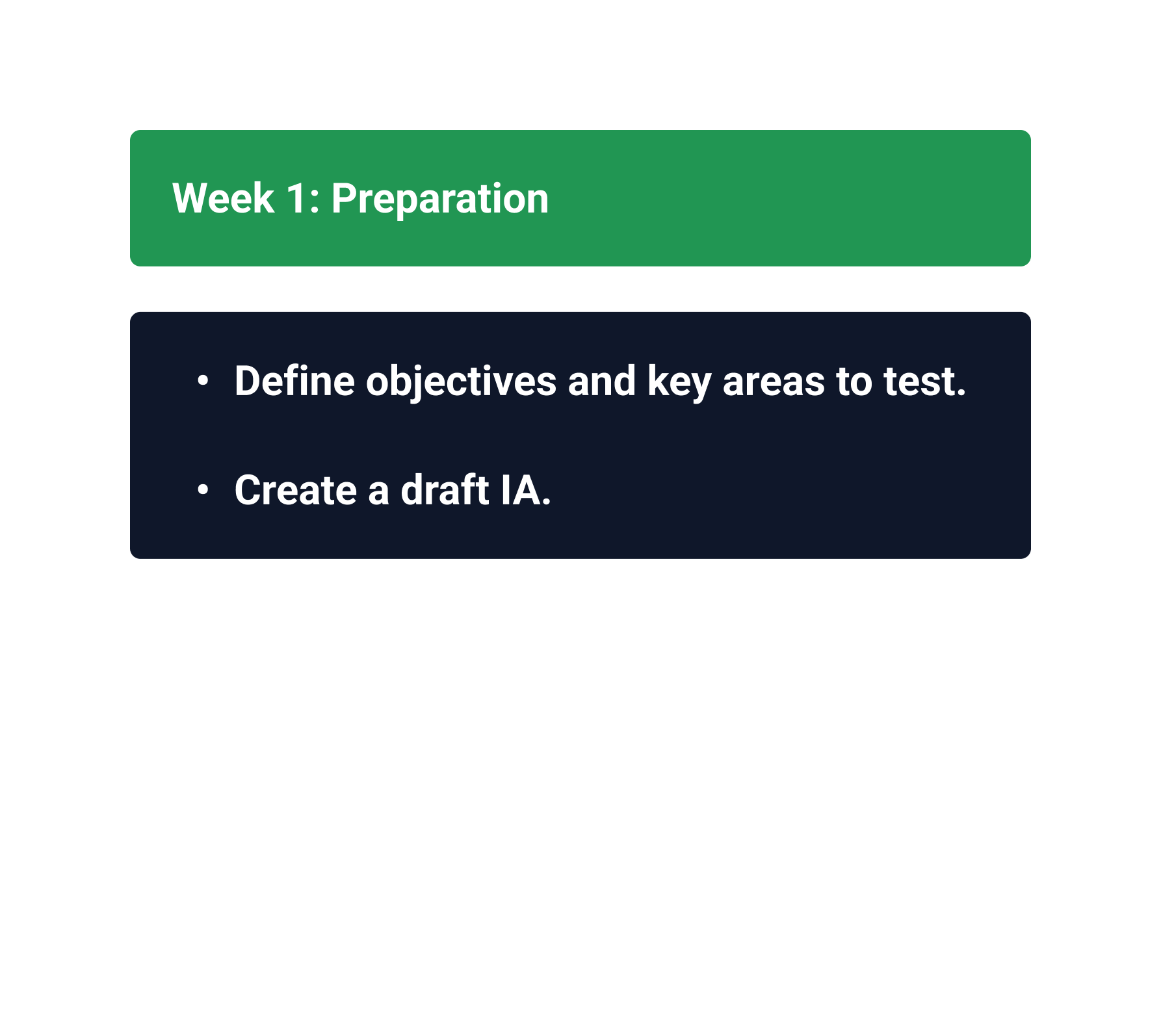
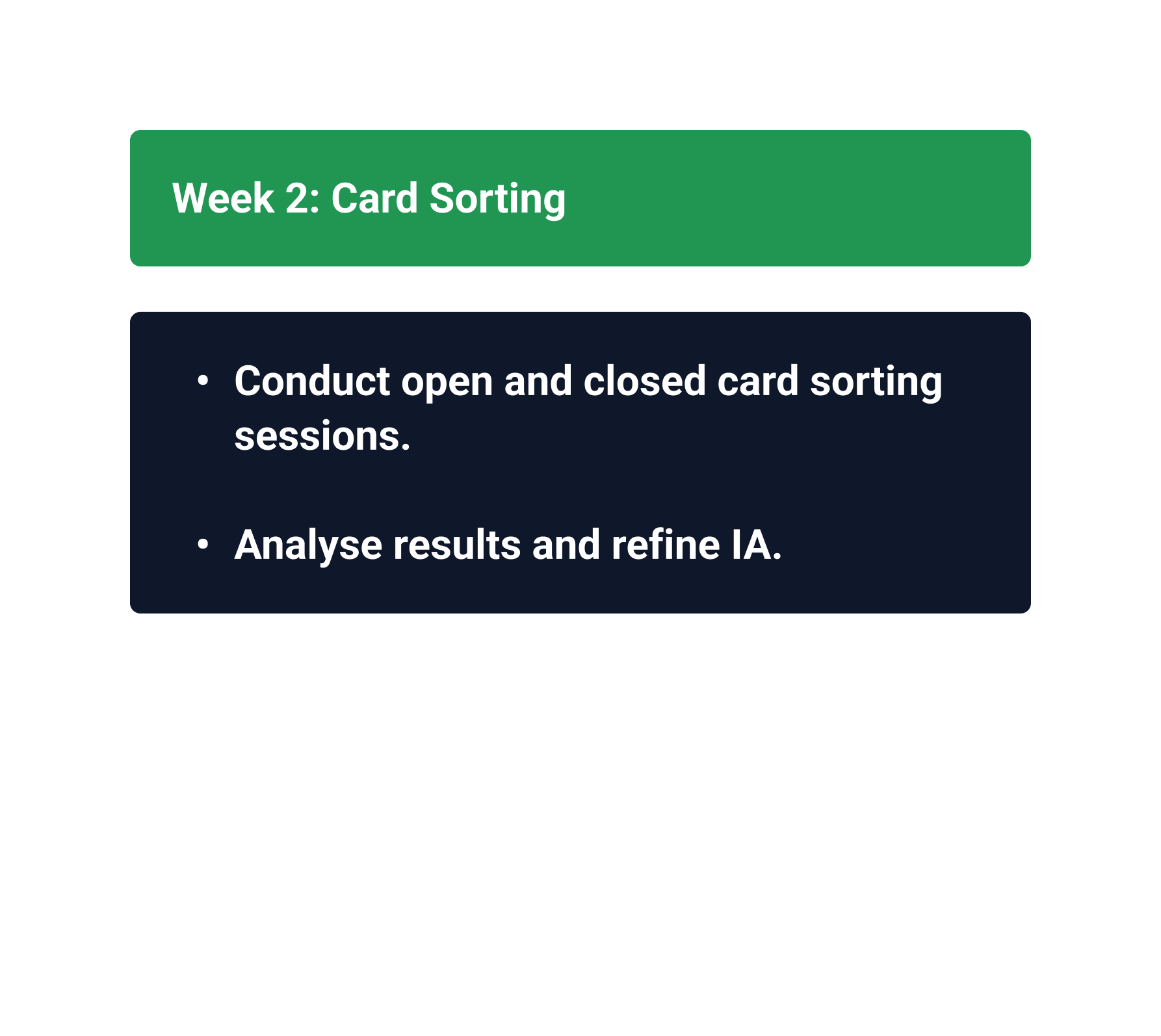
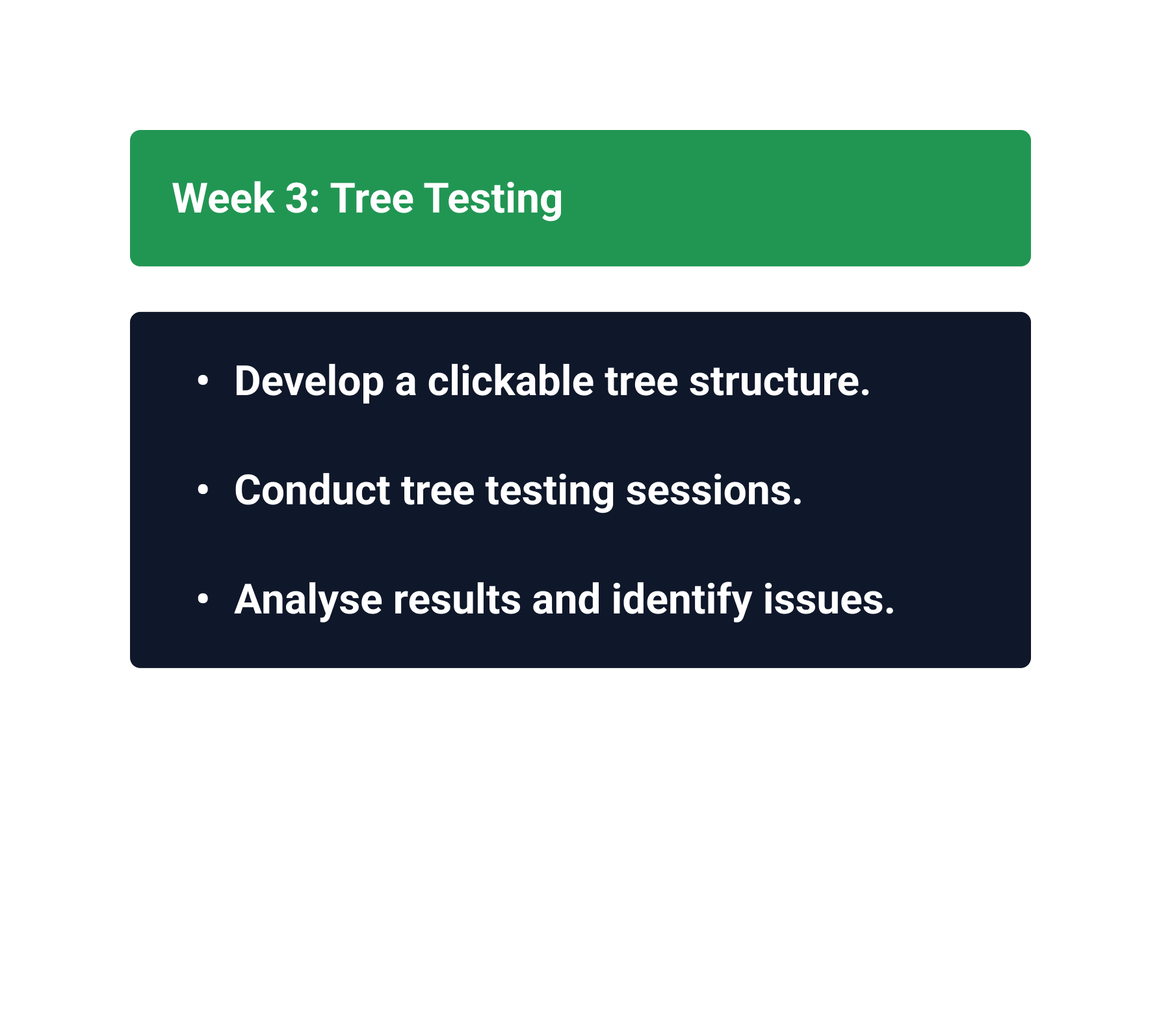

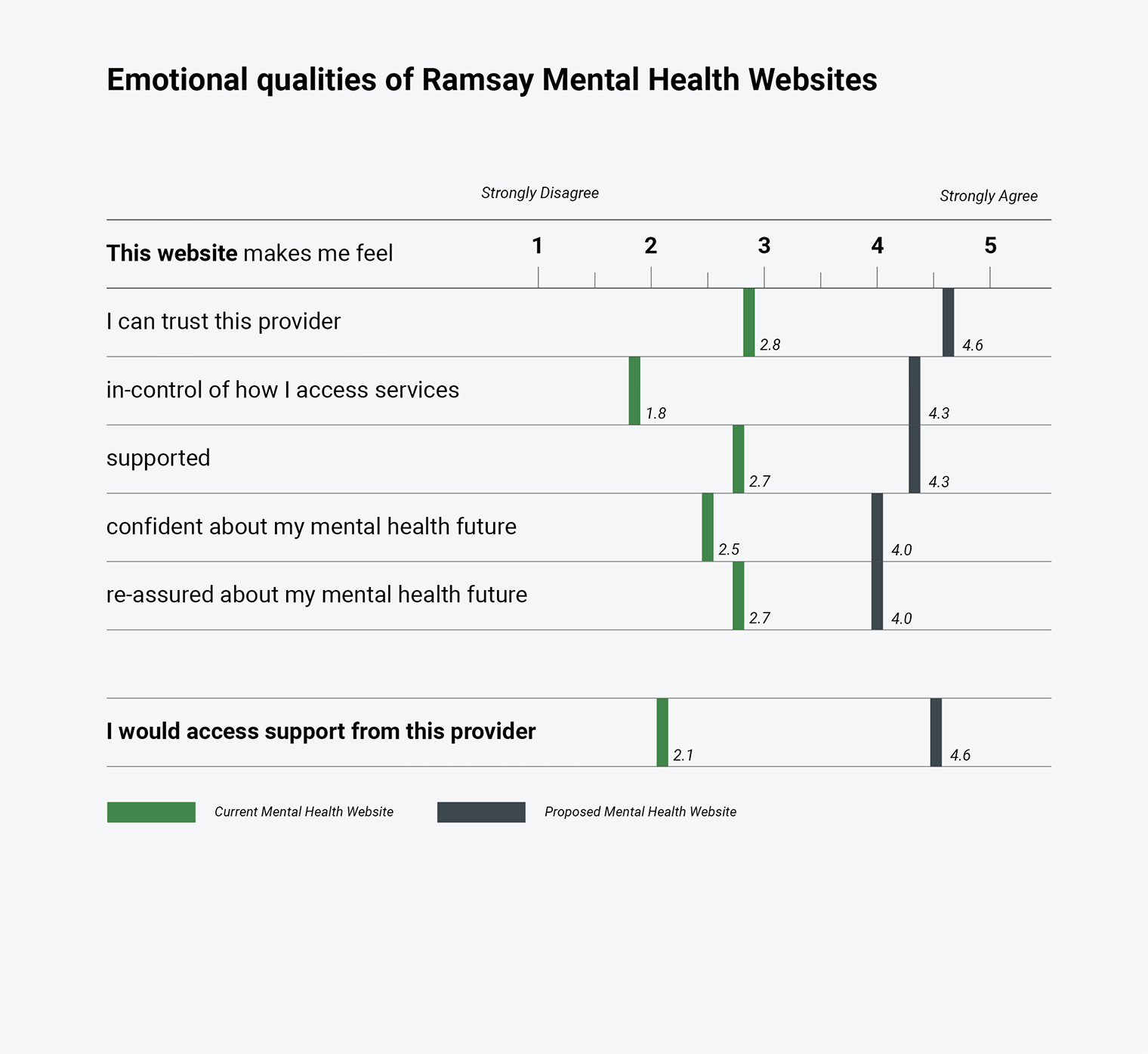
From brand to design system
Turning a brand into a digital system:
Brand
↓ Design foundations
↓ Tokens
↓ Components
↓ Patterns
↓ Templates
↓ Experiences
↓ Governance
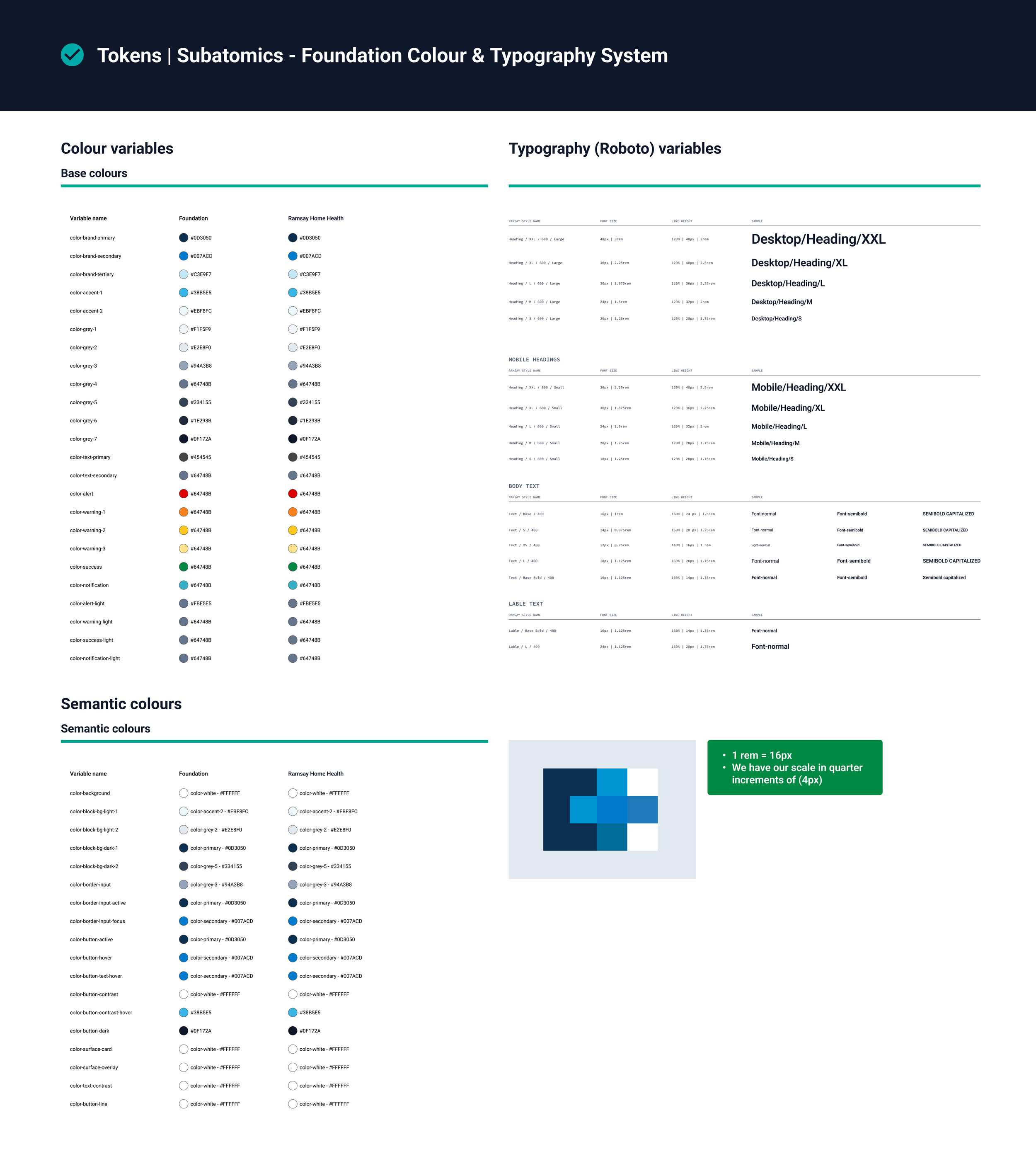
Tokens & Subatomic
-
![]()
Tokens Subatomics Foundation colour & typography System
-
![]()
Atoms icons

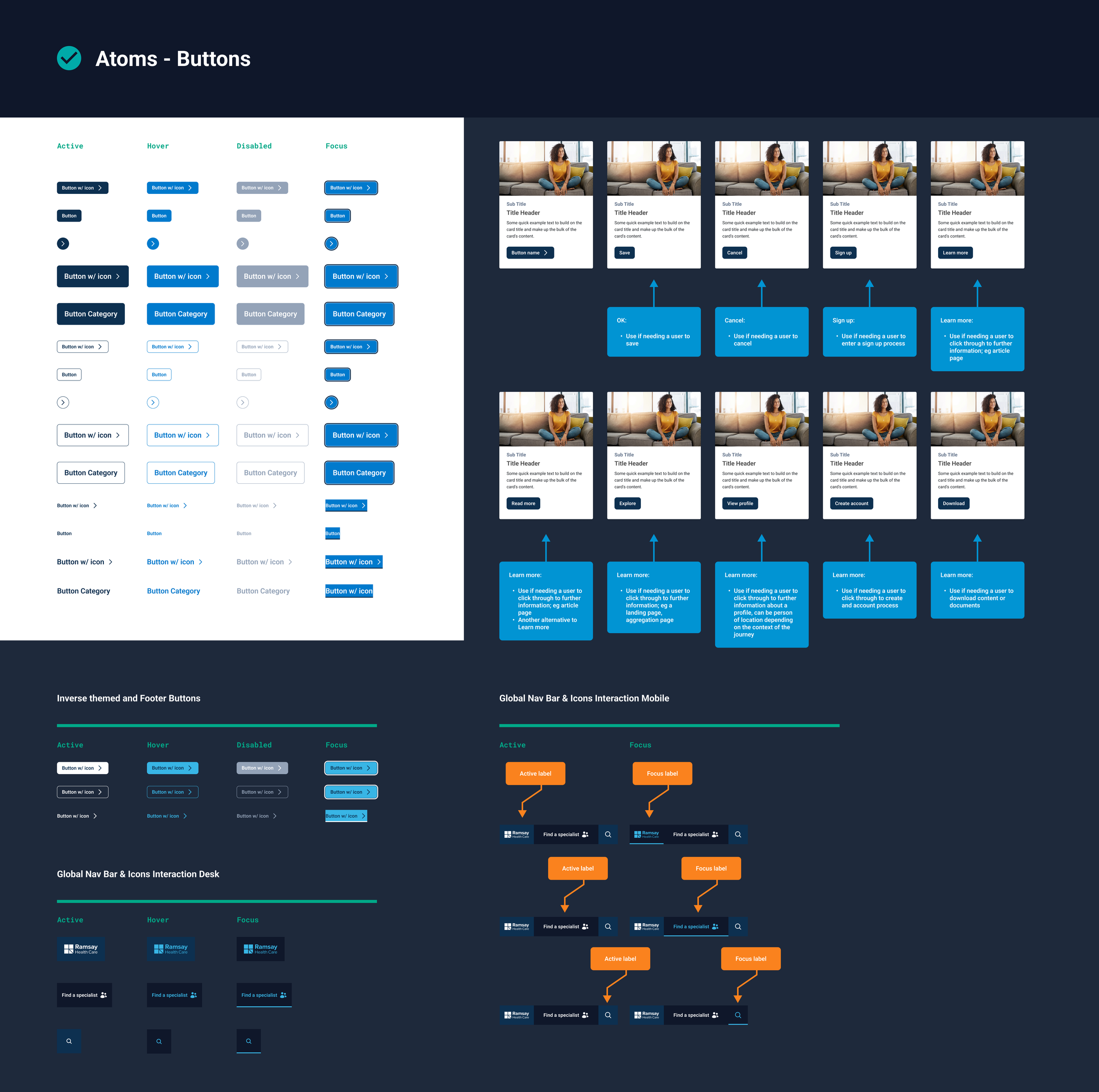
Atoms
-
![]()
Atoms Grids Foundation
-
![]()
Atoms Buttons
-
![]()
Atoms Icons
-
![]()
Atoms Icons Clinical Quality & Safety Results


Molecules
-
![]()
Molecules Forms
-
![]()
Molecules Organisms WYSIWYG Blocks Mobile
-
![]()
Molecules Organisms WYSIWYG Blocks Desk


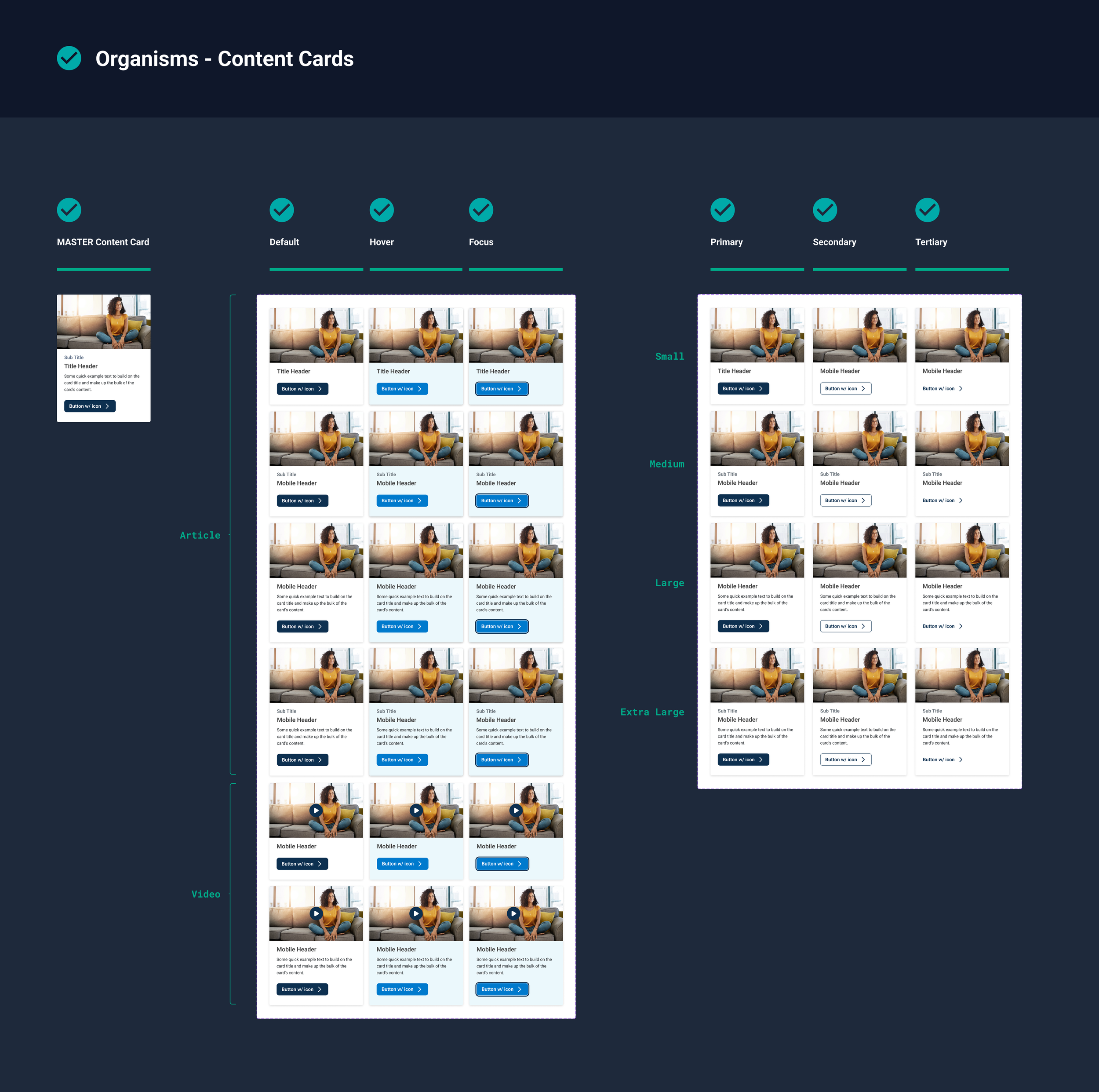
Organisms
-
![]()
Organisms Content Cards
-
![]()
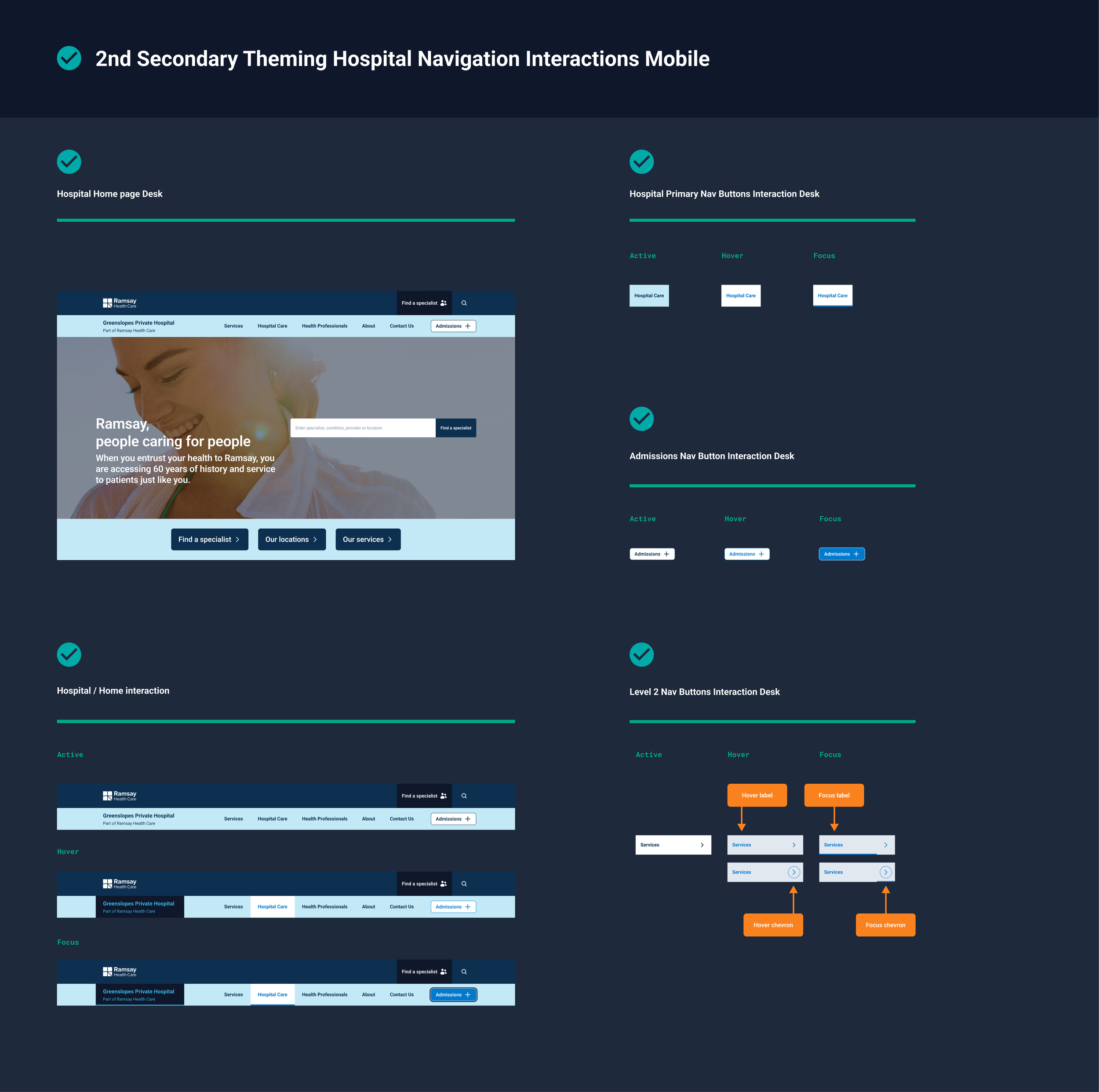
Secondary Theming Hospital Navigation Interactions Mobile
Templates
-
![]()
Templates Global Local
-
![]()
Hospital Local Solution & New Experience
-
![]()
Corporate Local Solution & New Experience


Pages
-
![]()
Pages Local
-
![]()
Pages Local


Ecosystem:
Global with Secondary Theming
-
![]()
Global Buttons & Logo Icons Interactions
-
![]()
Global Navigation Interactions
-
![]()
First Secondary Theming Corp Button & Icons Interactions Desk
-
![]()
First Secondary Theming Corp Button & Icons Interactions Mobile
-
![]()
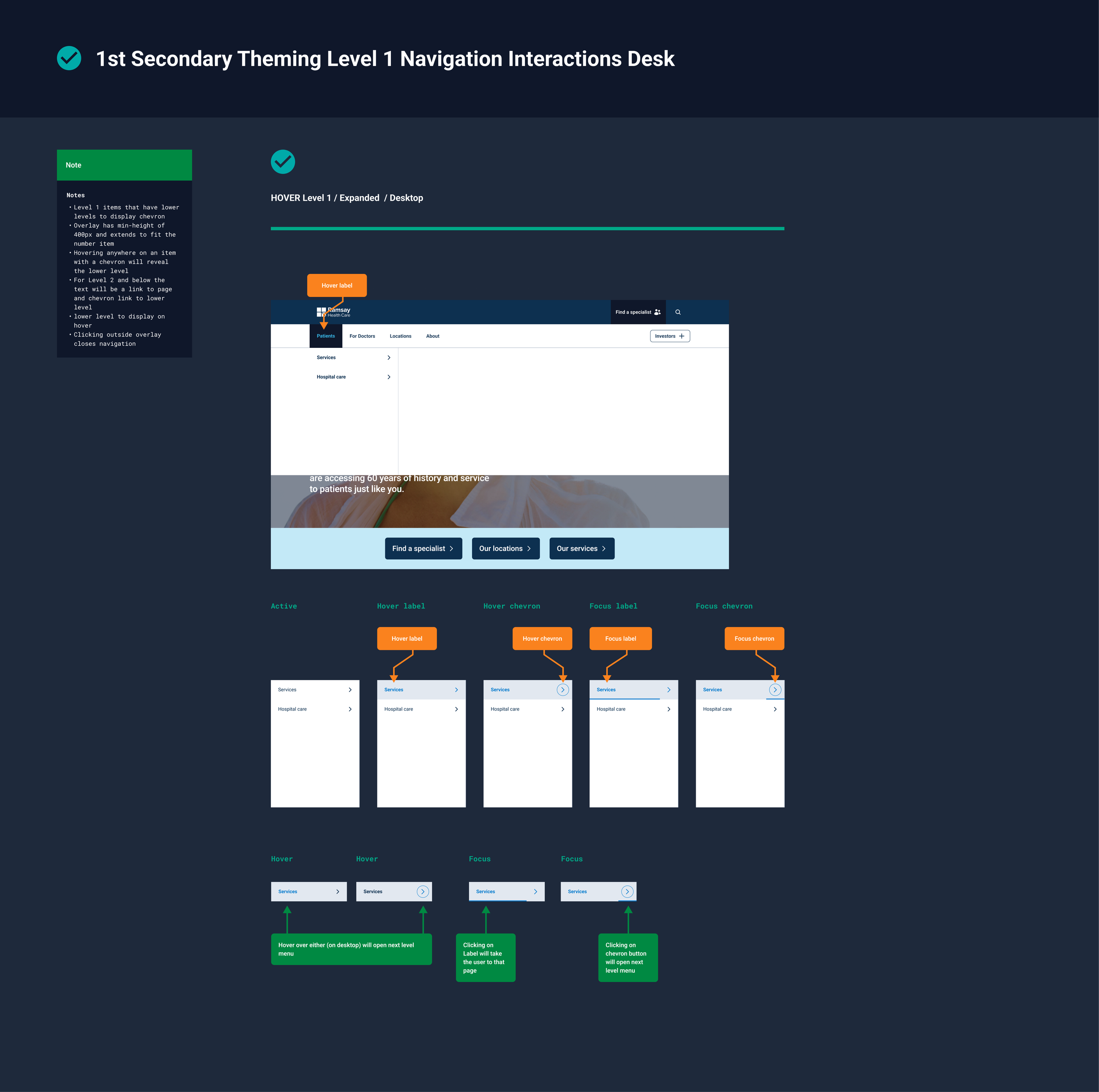
First Secondary Theming Level One Navigation Interactions Desk
-
![]()
First Secondary Theming Level 1/2/3 Navigation Interactions Desk
-
![]()
First Secondary Theming Level One Navigation Interactions Mobile
-
![]()
First Secondary Theming Level 2/3 Navigation Interactions Mobile




Ecosystem:
Local with Secondary Theming
-
![]()
Secondary theming hospital navigation interactions mobile
-
![]()
Secondary theming hospital navigation level 2 mobile
-
![]()
Secondary theming hospital navigation interactions desk
-
![]()
Secondary theming hospital navigation level 2 desk
-
![]()
Secondary theming hospital navigation interactions mobile
-
![]()
Secondary theming hospital navigation interactions desk


Designing for scale
Three pillars:
A design system isn't a library of components. It's a way of making better decisions repeatedly.
-
Shared components, patterns and interaction models.
-
Local teams could adapt experiences without breaking the system.
-
Documentation, contribution models, naming, accessibility and design reviews.
Conclusion & Learnings
Unified Experiences: Connected corporate and hospital journeys through a shared IA and navigation model.
Accessibility Through Consistency: Consistent patterns improved usability and accessibility across experiences.
Governance Enables Scale: Clear rules and reusable components supported sustainable digital growth.
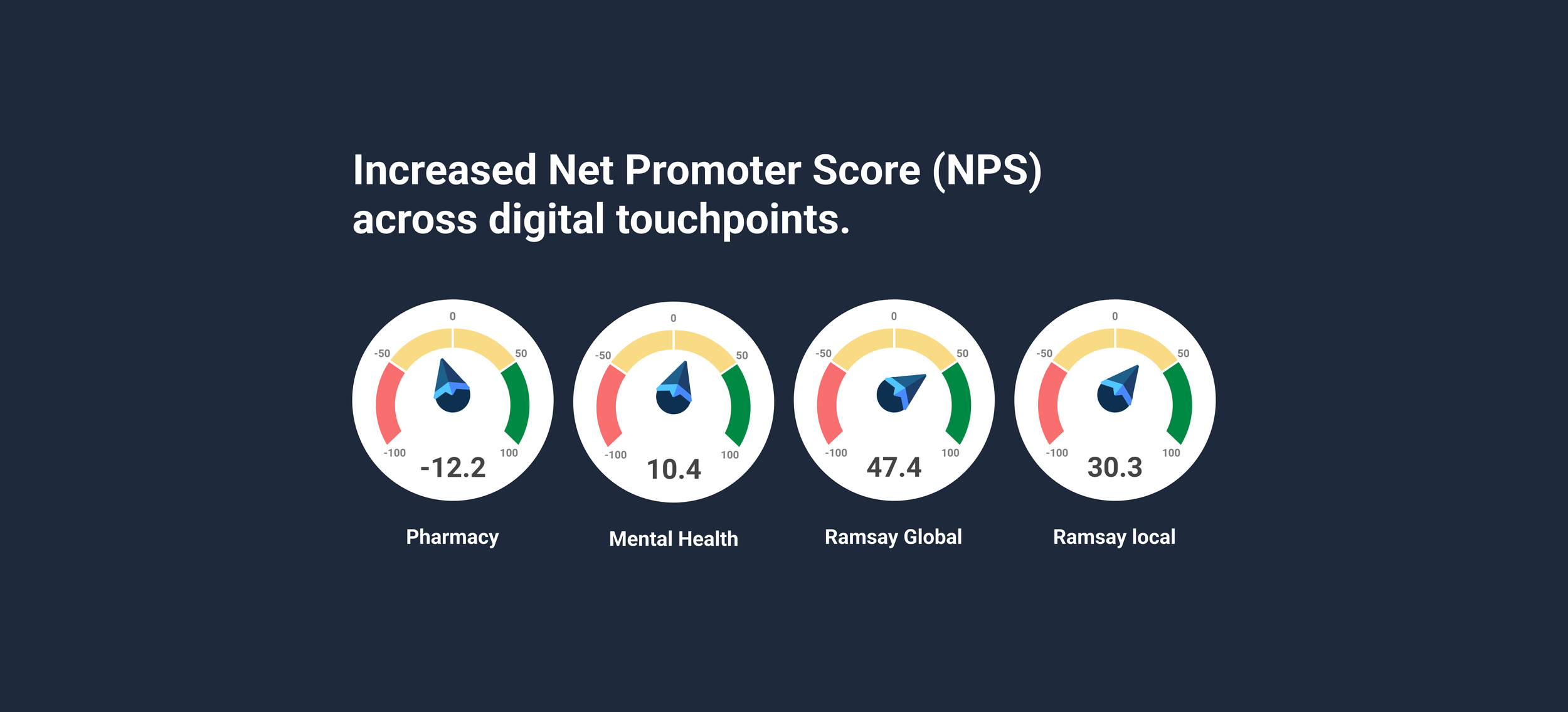
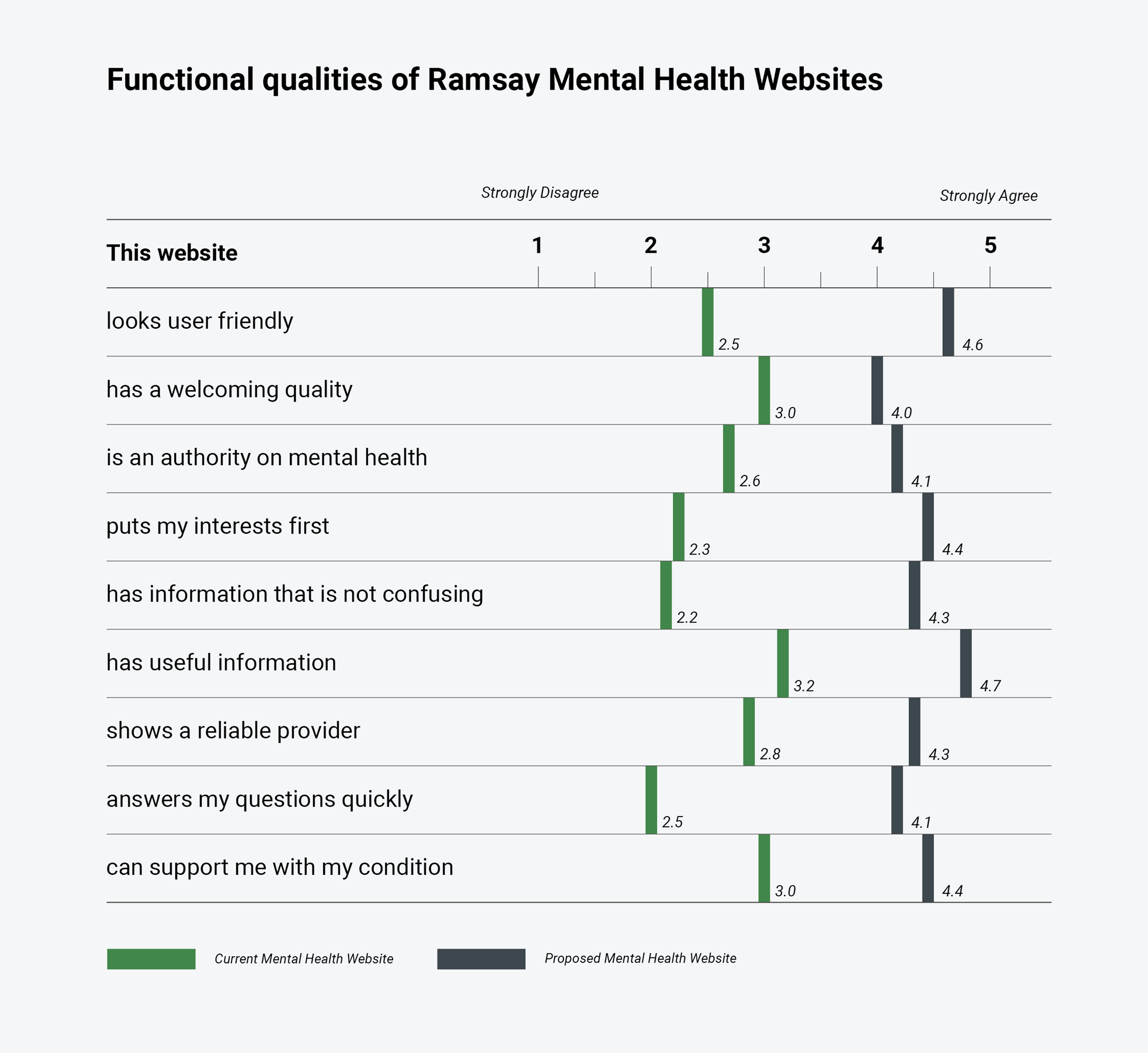
Research Drives Better Outcomes: Testing and validation helped refine IA and design decisions.
Design Systems Connect Brand & Product: GEL aligned brand, UX, UI and content into one scalable ecosystem.
Thank you.
Questions
What does success look like in this role after 3, 6, and 12 months?
How are change requests handled, and is there a strong alignment with quarterly road maps?
What is the thinking and culture around AI at Youi?
How do designers collaborate with Product Managers and Engineers?